
Leaks, faucets and fixtures
How to clean a jetted bathtub safely
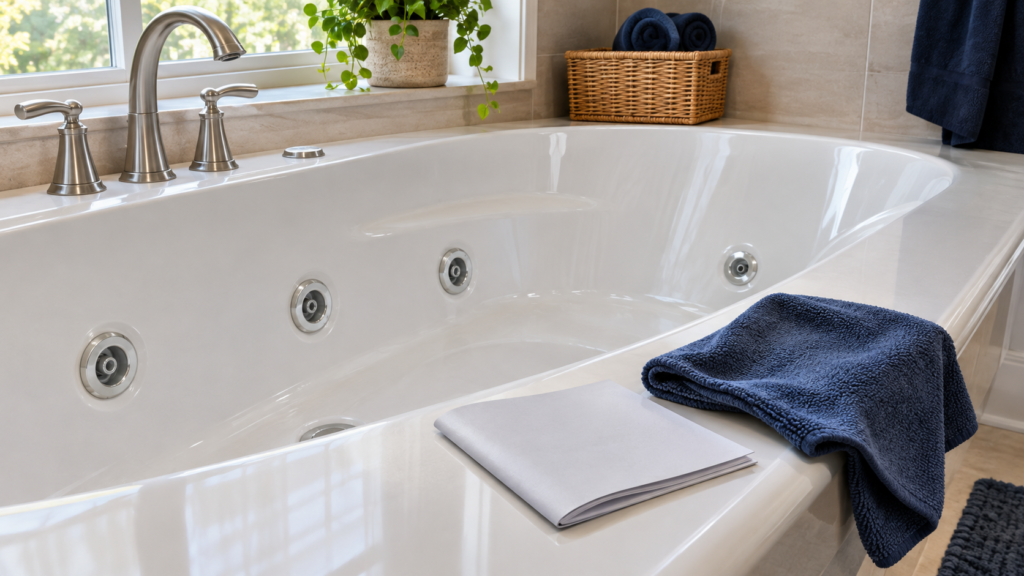
To clean a jetted bathtub, first identify the system and the exact model. A whirlpool recirculates bath water through a pump and plumbing. An air bath pushes air through small outlets and may run a drying cycle after the tub drains. Both need gentle surface care, but a whirlpool pipe flush is not automatically appropriate for an air bath. The manufacturer’s instructions determine the approved cleaner, amount, water temperature, fill level, cycle length and accessible parts.
Stop using the tub if water appears underneath, an outlet or electrical component gets wet, the system makes an unusual noise, or cleaning creates an irritating smell. Keep people away from water near electricity. Do not open an electrical panel or pump compartment. If a product has already been added, do not add another chemical to counteract it. Resolve the safety concern before trying to clean the jets.
First identify what “jets” means on your tub
The term jetted tub covers several designs. A whirlpool usually has larger wall mounted nozzles that return water drawn from the bath. A separate intake cover is part of that circuit. An air bath has many smaller air outlets, often on the floor or sides. Some products combine both. Bubbles alone do not identify the system, because air can also be mixed into a water jet. The correct maintenance method starts with the actual equipment, not the appearance of bubbles.
Look for the brand and model number on your purchase records, an accessible label or the installer’s paperwork. Controls may say Whirlpool, Air, BubbleMassage, Pure Air or a manufacturer specific name. Find the owner’s manual for the exact number and read the care section. If the label would require moving the tub or opening a technical enclosure, use photographs to ask the manufacturer or installer for help identifying it instead. A photograph of the control pad and an overall tub view can be useful.
Identification prevents two mistakes. Running a system with too little water can spray water outside the bath and may harm equipment. Putting a whirlpool pipe cleaner into an air system may be ineffective or incompatible. MAAX’s Canadian maintenance guidance separates ordinary tub surfaces, air massage and whirlpool systems. A recipe from one brand cannot stand in for the instructions supplied with another model.
Read the model limits before starting a cycle
Check the whole procedure for the cycle you plan to use. Record the required water depth over the highest outlet, maximum temperature, air control position, approved cleaner and any rinse cycle. Bathing temperature, cleaning cycle temperature and the tolerance of a surface finish are different issues. Do not pour boiling water into the bath or guess a cleaner dose. If the instructions are missing, pause and obtain them from the manufacturer rather than testing a popular online mixture.
Make sure the tub drains normally and there is no visible leakage around the faucet, overflow, drain or nearby floor. A slow draining bathtub calls for a drain assessment even if the massage jets work. Do not start a lengthy maintenance cycle in a bath that may overflow or back up. If moisture appears below the tub, our guide to signs of a hidden water leak can help you describe the observation without opening finished surfaces.
Set out a clean soft cloth, a container for visible debris and only the product approved by your manual. Clear the rim so a bottle cannot fall into the bath. Follow the product label’s ventilation directions. Keep children and pets out of the work area. A jetted tub combines electricity and water: a burning smell, repeated protective trips or damaged wiring calls for stopping the system and seeking appropriate help, not another trial run.
Method 1: clean the bath surface and accessible outlets
Start on the outside of the system. After draining the tub, pick up visible hair and debris without pushing it into an opening. Wipe the basin and the area around each outlet with a soft cloth or nonabrasive sponge and a cleaner compatible with the finish. Rinse as directed and dry accessible surfaces. Acrylic, composite and other materials have different care requirements. A product safe on the basin may still damage a gasket, trim or metal finish.
MAAX recommends nonabrasive products suitable for acrylic and warns against scrapers and metal brushes. That advice concerns the surface; it does not disinfect every pipe. Do not push a wire, pipe cleaner or stiff brush into a nozzle. A chrome outlet that turns to adjust flow is not necessarily designed to come apart. Forcing it may displace a seal. If your manual names a removable piece, use its diagram and keep the parts in removal order for accurate reassembly.
A pale ring may reflect mineral deposits; a slick film may follow bath oil or other additives. Appearance does not establish the condition of the plumbing behind the bath wall. Photograph a recurring deposit before treating it. Vinegar suggested for a particular surface is not automatically suitable inside a pump. Separate spot cleaning of an accessible stain from circulating a substance through the system. This distinction matters even when both actions are casually called cleaning the jets.
Inspect only parts that the owner’s instructions identify as user serviceable. Some intake covers have a specified cleaning procedure; other covers should remain in place. Never operate a whirlpool while a protective intake cover is removed. That cover serves a safety function for bathers. If it is damaged or missing, leave the system off until it can be restored correctly by a qualified person.
Method 2: flush a whirlpool circuit when its manual permits it
A whirlpool can retain residue in its internal circuit after the bath has drained. Its manufacturer may prescribe a pipe cleaning cycle with a dedicated product, a fill level and a run time. Follow those instructions for your own model. Do not substitute a universal blend of soap, vinegar and bleach. MAAX’s procedure for certain whirlpool products, for example, specifies the water level, temperature ceiling, cleaning agent and rinse. Those numbers illustrate why the procedure belongs to a particular system; they are not a blanket recommendation for every tub.
Before filling, confirm that the drain and overflow work and that no earlier cleaning chemical remains in the bath. Add water to the level directed by your manual without exceeding its temperature limit. Measure only the approved product, following both the equipment instructions and product label. Run the system for the stated time while staying nearby to notice leaks, excessive foam or an abnormal sound. Stop promptly if any appears. A longer or stronger cycle is not necessarily a better one.
When the cycle ends, switch the jets off before the water falls below their required level unless the manufacturer explicitly prescribes a different sequence. Drain the bath, rinse the surface and perform the specified circuit rinse. A clear water rinse may require a second fill; follow the given height and duration. Do not leave a full tub unattended to soak longer. Dry accessible surfaces and watch what happens during later ordinary use. A single cycle does not prove that an underlying mechanical fault is gone.
The Jacuzzi operating manual for its Pure Air and Whirlpool systems treats those functions separately and sets an immersion level for operation. It also discusses its system cleaner for the whirlpool products covered. People often call any jetted bath a “Jacuzzi,” but that everyday term does not transfer Jacuzzi’s model specific settings to an unrelated appliance.
Method 3: maintain an air bath and its drying function
In an air bath, small outlets push air into the water. Moisture in the air channels may be managed by an automatic or manual purge. Consult the drying or purge section for your model. Some baths run a cycle after draining; others call for a particular user action. Do not disconnect the appliance simply to stop a cycle the manual describes as normal. A genuinely unusual operation or repeated electrical trip, however, warrants evaluation before further use.
First clean the basin and accessible outlet surfaces using finish compatible products. Do not pack small openings with paste or enlarge them with a sharp point. Let the prescribed drying cycle complete. MAAX notes that some air massage systems have programmed automatic drying and directs owners to their installation instructions for details. Another manufacturer may require a different sequence. No single flush method should be assumed to cover every air bath.
If the tub combines air and water functions, follow the instructions for each circuit separately. One control panel can operate two mechanisms without making their maintenance identical. Keep the manual page that identifies each system; it will be more useful to a service person than a collection of online cleaning recipes. If an air channel seems blocked after approved maintenance, do not try to clear it with wire or compressed air. Seek product specific advice.
Why mixed chemical recipes are a poor default
Search results can present homemade mixtures as though all jetted tubs share the same materials and plumbing. They do not. Instructions can differ in product, dose and rinse requirements. A formula for commercial use, a particular brand or the outside surface may be unsuitable for a different residential bath. Heavy foam may also interfere with a whirlpool system. The sound decision is to identify the model and use its current care directions.
Health Canada warns against mixing bleach with other cleaners, especially those containing ammonia or acids such as vinegar. Read each label. Never add vinegar to neutralize an earlier product or bleach after a cleaner whose residue may remain. If you cannot establish what has already been used, stop the cycle and ask the manufacturer or an appropriate safety service for guidance. Do not experiment with multiple products in a confined bathroom.
An irritating odour, burning eyes or dizziness during cleaning do not indicate effective disinfection. Leave the area and follow the safety information for the product involved; seek urgent help when warranted. Do not lean back over the bath to judge the result. People’s safety and the label’s ventilation guidance take priority over finishing a maintenance schedule.
What if black particles emerge from the outlets?
Dark flecks or film may be residue in a circuit, but appearance alone cannot identify the material. Note whether it happens at startup, after several minutes, following the use of bath oil or after a long period without use. Photograph the water and outlets without touching the intake cover. A manufacturer prescribed maintenance cycle may be reasonable if there is no leak or other reason to stop using the unit.
If particles return after the instructed cleaning, an odour persists or flow changes substantially, arrange an assessment rather than increasing the cleaner dose or repeating cycles indefinitely. A part, internal circuit, past product use or another factor may be involved. Colour is not a reliable diagnosis. Avoid using the bath until the concern is clarified, especially for occupants who may be more vulnerable to an exposure.
Weak jets, a slow drain and a leak need different responses
Weak jet flow may involve a closed adjustment, electrical supply, too little water or a mechanical problem. Cleaning is only one possibility. Check the controls and fill level that the manual describes without opening a box or bypassing a protective device. If the pump runs but water jets do not, note the sound and control settings for the manufacturer or tradesperson. Repeatedly restarting it does not diagnose the cause and may worsen a fault.
If water leaves the tub slowly while the jets remain strong, the concern is with the drain or its operating mechanism rather than necessarily with the massage circuit. See our slow bathtub drain guide for safe observations. Water rising into the bath when another fixture operates broadens the concern to shared drainage. Stop the affected uses and ask for an appropriate assessment rather than trying a stronger jet cleaning product.
Moisture under the tub or near an adjoining wall changes the priority again. Stop using the bath and note only what is visible without removing its enclosure, moving the unit or opening an electrical panel. Describe the location, timing and apparent amount. Our hidden leak guide helps separate observations from diagnosis. A plumber can identify the source after inspection; moisture appearing during jet operation alone does not prove that the pump is responsible.
Set a maintenance interval that fits the product
Manufacturers sometimes specify a frequency for flushing a whirlpool circuit or running a drying cycle. Jacuzzi gives regular cleaning guidance for its relevant whirlpools; MAAX sets out its own routine. The right interval depends on the model, frequency of use and bath additives. Copy the instruction from your actual manual into a calendar. A schedule found for a different brand is a poor substitute, even when the tubs look similar.
After each bath, draining the water, clearing accessible debris, rinsing the finish when required and allowing the prescribed purge are more dependable than an occasional oversized cleaner dose. Oils, salts and bubble bath products can leave deposits or affect certain finishes and systems. Check compatibility before use. For a bath used infrequently, look for the manufacturer’s return to service guidance instead of running the jets dry as a quick test.
Prepare a useful request for help
When contacting the manufacturer, installer or plumber, gather the brand, model, photographs of the controls, approximate date the behaviour changed, products used and steps already performed. Explain whether the problem occurs with the air function, water jets, drain or only while heating. Record error codes without clearing them. This description prevents the single word “jets” from confusing different circuits and potentially different trades.
Disclose any cleaning chemical still in the bath and any leakage. If an access hatch already exists, describe its location without dismantling the tub. Ask which part of the installation will be assessed, whether another trade may be needed and how additional work would be authorized. No particular repair, replacement part or price can be established from flecks or weak flow alone. A clear report of the symptoms is more useful than a guessed diagnosis.
For operation or cleaner compatibility, the bath manufacturer is often the best first contact. For a plumbing connection leak, slow drain or water damage in Greater Montréal, you may contact ProDrain with the observations. Find more practical reading under Leaks, faucets and fixtures. Leave any system with uncertain electrical safety or watertightness switched off while an assessment is arranged.
Frequently asked questions about cleaning jetted baths
Can I pour vinegar into the jets?
Only if the manual for your exact model explicitly permits it in the circuit concerned. Advice for removing a spot on the basin does not apply automatically to the pump and pipes. Never mix vinegar with bleach or the residue of another cleaner.
Should I remove every jet nozzle to clean it?
No. Clean visible surfaces and remove only pieces the manufacturer identifies as user removable. An outlet that twists for adjustment may not be designed for disassembly. Never operate a whirlpool without its intake protection installed correctly.
Can I run the jets in an empty bathtub after bathing?
Follow the product manual. Some air baths run a drying cycle after draining. A whirlpool may require water over its outlets whenever it operates. The safe control sequence depends on the actual system.
Why does foam appear after a cleaning cycle?
Product or bath residue may remain in the circuit, but its source cannot be confirmed by sight alone. Stop if foam overflows or the equipment behaves unusually. Check the prescribed rinse and cleaner dose, and seek advice if the problem persists.
Does an odour mean I should disinfect with bleach?
No. Smell alone does not identify a cause or authorize an unapproved product. If it is irritating, leave the room and follow the safety instructions for any product already present. Otherwise note when it appears, consult the manual and seek an assessment if it returns after the recommended care.