
Maintenance, prevention and water damage
Does homeowners insurance cover plumbing water damage?
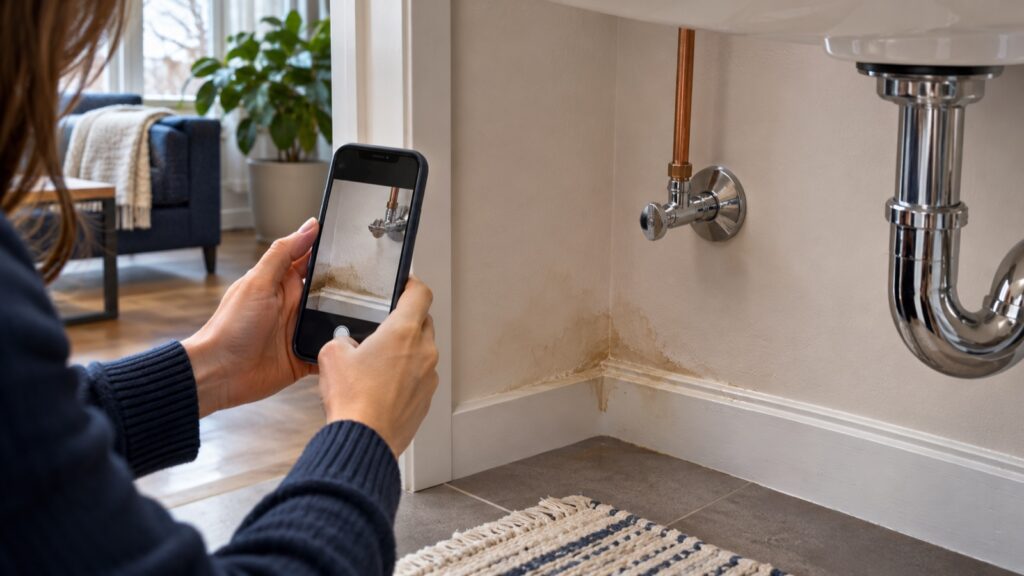
Homeowners insurance may cover some plumbing water damage, but a wet floor does not mean every pipe, appliance or repair will be paid for. The answer depends on how the water entered, which property was damaged, the wording of your policy, any water endorsements, the deductible and the limits. A sudden escape from a household plumbing fixture raises different questions from moisture that developed gradually behind a wall. This guide helps Quebec homeowners document the facts and ask useful questions. Your homeowners insurance provider must assess the specific occurrence and contract before anyone can determine coverage.
Deal with immediate danger first. Keep people away if water has reached electrical equipment, if sewage is involved, or if a ceiling or other structure appears unsafe. Do not step into water that could be energized and do not open an electrical panel. Close an accessible water shutoff only when you can reach it safely. If the situation is dangerous, contact the appropriate emergency service or qualified professional. Our guide to safe steps while waiting for an emergency plumber covers the first plumbing decisions. Then notify your insurer or broker as soon as you can.
Homeowners insurance and plumbing: separate the costs
A water loss often contains several different costs. One is the failed part: a supply pipe, connector, valve, appliance hose or water heater. Another is the resulting damage to the building and contents. A third is the work needed to find and reach the source, dry materials and restore finishes. A fourth is the cost of living elsewhere if the home cannot be occupied. Your homeowners insurance policy can treat these items differently. Ask the insurer to state which item is being discussed whenever someone says that a “plumbing claim” is covered or excluded.
The Autorité des marchés financiers (AMF) explains Quebec water damage protections. Its examples include damage caused by a sanitary installation under basic coverage, while other water risks generally call for additional protection. That general explanation does not promise payment for a worn pipe, every leak, or all restoration work. The homeowners insurance policy wording and established circumstances matter. Read your homeowners insurance declarations and endorsements with the insurer instead of relying on an online statement about what a typical policy pays.
The broken part and the resulting damage
Suppose a connector under a sink fails and water spreads across the floor. A plumber may need to repair the connector to stop the escape. The flooring, cabinets and belongings are separate damage items. Ask for a scope that distinguishes the source repair from removal of wet materials, drying and reconstruction. A deductible could apply even when part of the loss is accepted, and a water endorsement may have its own limit. The total contractor quote is not automatically the amount the insurer will pay. Ask for the calculation in writing.
Appliances create similar distinctions. A washer hose, a dishwasher connection and a water heater can each lead to water on the floor, but the appliance or hose, the nearby building materials and the contents should be documented separately. An appliance found in a puddle is not necessarily the source. Water may have travelled from a different fixture. Likewise, a technician’s recommendation to replace an aging unit is a technical or maintenance decision, not proof that replacement is an insured loss.
Access, drying and making the room usable again
Water can emerge through a wall or ceiling far from its point of origin. Locating the leak may require an opening, while drying and restoration may involve additional trades. Ask which exploratory work is authorized and who will decide what materials must be removed. A plumbing invoice may describe only the pipe repair; it may not include moisture measurements, cleaning or repainting. Keep each scope and approval in writing. An emergency authorization to stop water is not automatically permission to rebuild an entire room.
Find the water pathway without guessing the cause
The source could be a supply line, drain, plumbing fixture, roof, ground water, sewer backup or overland flooding. These pathways can correspond to different policy provisions. The AMF distinguishes risks that generally need an endorsement, and its discussion of river flooding is not interchangeable with a leak under a bathroom sink. Ask your homeowners insurance provider for the specific insured peril, endorsement, exclusion and limit the insurer considers relevant. A neighbour’s accepted claim is useful context at most; it cannot establish the wording of your homeowners insurance contract.
A stain on the ceiling does not prove that the pipe immediately above it leaked. Water may follow a joist before it becomes visible. Dampness near a toilet might come from an overflow, a seal, supply connection, condensation or a different room. Record when and where you noticed it. Our guide to looking for signs of a hidden leak helps organize safe observations without opening walls at random. It is not a coverage test and does not replace an on-site diagnosis.
The difference between a single event and gradual moisture can be important, yet neither label settles the claim by itself. A visible rupture at a known time provides a different factual record from swelling discovered behind a cabinet. Avoid assigning an invented start date to a concealed leak. Describe what you know, what you inferred and what remains unknown. A plumber can report the conditions found; a claims adjuster evaluates the loss for the insurer. Keeping those roles distinct protects the accuracy of your file.
The first hours: protect the home and make the call
If you can safely isolate the water, close the relevant valve and stop using the affected fixture or appliance. Do not force a seized shutoff until it breaks. Move unaffected belongings away from water only when the area is safe. Sewer or floodwater can contain contaminants; avoid contact and obtain appropriate cleanup advice. The Quebec government’s post-flood guidance emphasizes safety and contacting the insurer. Its flood procedures should not be treated as a diagnosis of an ordinary interior leak.
Tell your insurer or broker about the occurrence promptly, even when the final cost and cause are unclear. The AMF’s claims guide recommends early contact and steps to protect property. Request a claim number, the adjuster’s contact information, instructions for sending photos and guidance on urgent work. Keep a dated note of the conversation and send a short written summary if useful. You can report a suspected source as a suspicion; you do not have to present it as a confirmed diagnosis.
Urgent work and evidence
Temporary work may be needed to stop water or prevent further damage. Ask the insurer how it wants that work documented. The AMF advises caution before incurring emergency costs, keeping invoices, watching the nature and price of the work, and waiting for authorization before permanent repairs. It also notes that emergency work is reimbursed only if the claim is accepted. Safety may require action before a full answer arrives; in that case, preserve the observations and receipts that explain why the work was necessary. Do not assume a contractor’s insurance estimate is an insurer’s commitment.
Photograph the room broadly and then the affected materials in detail, provided you can do so safely. Make an inventory of damaged belongings. Do not discard an item merely to clear the room: the insurer may need to examine it. If a material must be removed because of a hazard or to allow access, ask how to document or retain it. Health and safety instructions still take priority; keeping contaminated material solely as proof can create another problem.
Build a clear, factual claim record
Start a timeline with the last time the area was known to be dry, when the water was discovered, who was present, what equipment was being used, when a valve was closed, and when calls and visits occurred. Mark an approximate time as approximate. Take photos of the location before cleanup if safe, then photograph the suspected source and the progress of visible damage. Never enter an unsafe room to obtain a better picture. A photograph is evidence of what could be seen at a moment; it does not necessarily prove how long a concealed leak existed.
Keep the policy declarations, endorsements, insurer messages, estimates, invoices, receipts and technical notes together. For each expense, note who requested it and what work it covered. Ask a plumber to describe what was actually observed and repaired, including the limits of the inspection. A visual check under one sink should not be reported as a complete investigation of the building. A plumbing report can help establish the source and the work done, but the insurer decides how the policy applies.
Contents and supporting documents
List damaged belongings by item, room, visible damage, approximate age and any purchase evidence available. If you no longer have a receipt, older photos, order emails or statements may help identify an item. Do not invent a purchase price or date to complete a form. The AMF recommends detailed information and supporting documents such as photographs, invoices and manuals. Keep your own copy and use the insurer’s designated channel to submit it. A tidy record makes it easier to correct an omission later.
Use neutral wording when the cause remains open: “water appeared below the sink after use,” “the ceiling mark enlarged overnight,” or “the meter moved when no intentional water use was known.” Avoid saying that a hidden pipe has leaked for months unless an investigation established that fact. A plumber, drying contractor and adjuster may each describe a different part of the situation. Ask for their observations and assumptions separately. If a report contains a factual error, request a correction before relying on it.
When another unit or a common building system may be involved, notify the owner, building manager or condo syndicate as appropriate. Record who received the notice and when. Do not open common walls or shut off water to several homes without authority and a safe plan. Coordination can reduce further loss and determine who may authorize access, but it does not itself decide liability. Avoid blaming a neighbour solely because the visible stain is below their unit.
Six homeowners insurance questions about the loss
1. Which water source is being assessed? Ask whether the policy distinguishes an interior plumbing fixture from sewer backup, surface water, a private water service line or another route. The AMF says some water risks generally require an endorsement. Ask the insurer to identify the exact coverage provision and any limit, rather than accepting a broad answer that “water is covered.” An endorsement name is a starting point, not a substitute for reading its terms.
2. Which damaged items and tasks are included? Separate the failed component, building finishes, belongings, leak search, access opening, drying and restoration. Ask whether the insurer wants an inspection before non-urgent demolition. If an urgent plumber repairs a fitting, that action does not settle the scope of floor replacement. Request a written breakdown so that the plumber, restoration contractor and adjuster discuss the same affected areas.
3. What will I pay? Confirm the deductible for this occurrence, the limit on any water endorsement, and how the policy values damaged property. Ask for a written explanation of the calculation once the scope is known. An estimate above an endorsement limit does not mean another coverage will fill the gap. Equally, a preliminary amount is not necessarily the final settlement if additional damage is properly documented. Compare the offer with your inventory and the actual work required.
Approvals, living arrangements and written answers
4. What needs approval before it starts? Ask about emergency protection, leak search, removal, drying and permanent rebuilding as distinct steps. Who selects contractors? Can you propose a different firm? What evidence should be collected before a wall is closed? The AMF explains that a policyholder can discuss a different repair approach or seek another valuation when reviewing a settlement. Raise changes before work makes the evidence difficult to inspect.
5. What if the home is not habitable? Ask whether additional living expenses apply to this covered occurrence, the limit, and which receipts to retain for lodging, food or transport. The Financial Consumer Agency of Canada’s home insurance overview describes temporary living costs as a possible protection. The AMF says to verify the details with your insurer. Do not assume an expensive hotel or every meal will be reimbursed without learning the policy terms.
6. Can the decision be explained in writing? Ask for the accepted scope, any reservations, the deductible and the documents still needed. If an item is declined, request the clause and factual reason. A contractor cannot interpret the policy on behalf of the insurer. Written answers also help when more than one trade is involved. If you disagree, the AMF describes how to raise a complaint with the insurer and seek further assistance.
Detached home, condo or rental: coordinate with the right people
In a single-family home, the insured owner reports the loss and organizes reasonable damage prevention. A condo can involve both the unit owner’s policy and the syndicate’s building policy. The AMF’s condo insurance guide explains those separate roles and says the syndicate should be told when a loss affects the building or a unit. Improvements, personal belongings and common elements may require different records. Do not decide in advance that the upstairs neighbour or the syndicate must pay; the source, contracts and responsibilities need examination.
If you rent, promptly tell the landlord or manager about building damage and contact your own tenant insurer about your belongings and any relevant protection. The landlord’s building policy does not automatically handle your contents. The federal home insurance overview describes tenant insurance as a separate product that may address possessions, liability and additional living expenses within its terms. Keep your communications factual and save copies. Do not promise a neighbour that your policy will cover their loss.
In a multi-unit building, quick access may be essential. Ask the manager or syndicate who can authorize entry, common-system work and notices to other occupants. Pass along concise observations rather than an accusation or a final diagnosis. If a shared shutoff affects multiple units, leave the decision to those authorized to manage it safely. Administrative coordination does not replace immediate protection of people and property.
After the water stops: review the homeowners insurance scope
Ask what was actually fixed and what still needs investigation. Was the removed component kept or photographed under the insurer’s instructions? Are materials still wet? Who confirms drying before a cavity is closed? A surface that feels dry is not proof that the inside of a wall has dried. The decision to remove, clean or rebuild materials should follow observed damage, applicable safety advice and the insurer’s process. Contaminated water requires particular care.
Read the plumber’s report before forwarding it. “Leak search” may mean a limited visual check, not an exhaustive investigation of every pipe. Request an accurate description of the work and its limits. Compare restoration estimates with the areas actually affected and the written insurer scope. An optional upgrade may be your own separate expense. If an offer does not match the evidence, ask precise written questions and use the insurer’s complaint process if the disagreement remains.
For future readiness, identify safely accessible shutoffs, store insurer contact details, and inspect visible hoses and connections periodically without dismantling pressurized plumbing. If you leave home during the heating season, ask your insurer which water and heat precautions your policy requires. The AMF warns that such conditions can affect a frozen-pipe claim. Maintenance may reduce some risks, but it cannot guarantee that no water loss will occur or that an insurer will accept a future claim.
Frequently asked questions
Will insurance pay to replace the leaking pipe?
Not automatically. The failed part, resulting damage, access and restoration are distinct expenses. Ask your insurer about each one under your policy, including the deductible and limits. A plumber can explain the technical work but cannot approve a claim.
Is a slow leak always excluded?
That phrase alone cannot decide a claim. The homeowners insurance policy wording, established cause, earlier signs, maintenance and purchased protections need to be reviewed. Record what you observed without inventing a start date. Ask the insurer to identify the relevant clause and facts.
Must I wait for an adjuster before stopping the water?
No, if water is escaping and you can act safely. Protect people and limit further damage, then notify the insurer promptly. Photograph the scene where safe, keep receipts and ask for instructions before permanent repairs.
What if the water seems to come from the next unit?
Notify the neighbour and building manager or condo syndicate as appropriate, and contact your insurer. Document damage in your own space. The suspected source does not by itself establish who pays; contracts and responsibilities are assessed separately.
Can a plumber guarantee that the insurer will accept my claim?
No. A plumber can describe conditions found, repair options and the work completed within the scope of the visit. The insurer assesses the occurrence under the policy. Request written confirmation under your homeowners insurance policy before assuming an expense will be reimbursed.
Where can I read more about preventing water damage?
Browse our maintenance, prevention and water damage guides. They help with observations and preparation, while your policy, a technical diagnosis and the insurer’s decision remain separate.
Return to maintenance, prevention and water damage for related guides.