
Maintenance, prevention and water damage
Home plumbing maintenance checklist
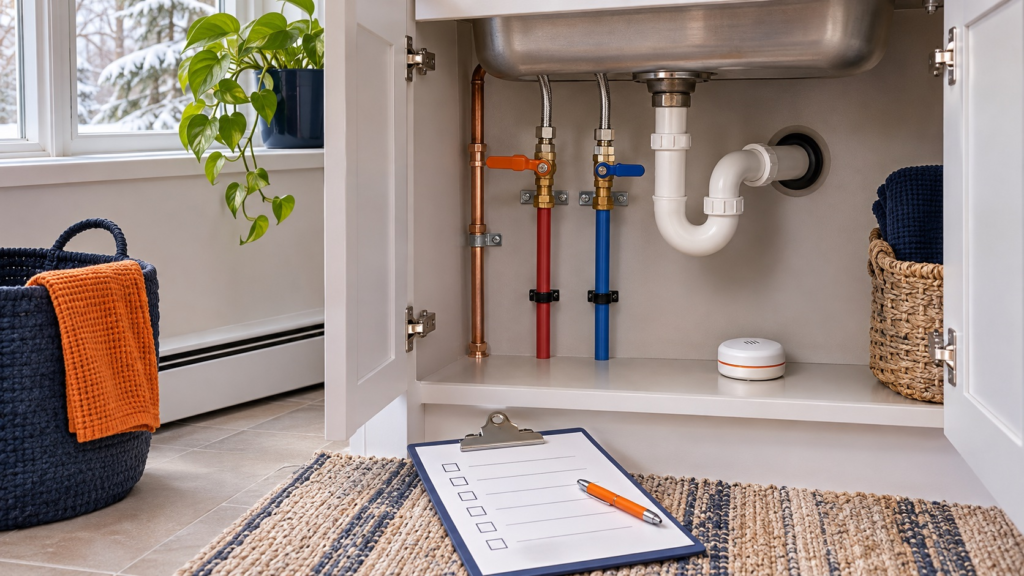
A useful home plumbing maintenance checklist is mostly about noticing change. Know where the water can be shut off, look at accessible connections, watch how fixtures drain, and keep a short record when something differs from normal. This guide gives Quebec homeowners a flexible inspection calendar. It is not a substitute for an appliance manual or a plumber’s assessment when water is leaking, sewage is backing up, or electricity may be affected.
You can learn a great deal without opening a wall or taking apart a water heater. A flashlight, dated photographs, appliance manuals and a few minutes in the places most likely to show water can reveal a developing problem. Compare what you see with the house’s usual condition. Then decide whether observation, a simple safe step, or professional help is appropriate. The intervals below are reminders for a household, not universal legal inspection schedules.
Start with conditions that cannot wait for a checklist
Water flowing uncontrollably, a dripping ceiling, wet electrical equipment, sewage returning through a fixture, or an unusual gas smell is an immediate safety issue. Move people away from the hazard. If you can reach an appropriate shutoff safely, stop the water. Do not enter water that may be energized and do not operate an electrical panel while standing in water. Seek emergency help suited to the danger, then arrange plumbing assessment. Follow the gas utility’s emergency instructions for a gas concern; do not investigate it as a plumbing maintenance task.
Less dramatic signs may still call for prompt attention: moisture that returns after drying, a stain that expands, a soft floor, water sounds when no fixture is operating, a new loss of pressure, or repeated backups. A checklist helps you identify change; it does not reveal the cause by itself. Dampness under a sink could come from a supply connection, drain connection, condensation, or a spill. Photographing the area after it dries can show whether it recurs, but one dry photograph does not establish that a leak is repaired.
If an appliance appears to be the source, stop using it when that can be done safely. Move belongings away without entering contaminated water. Record when the issue appeared, which fixtures were in use and whether the visible area is growing. Those observations help a professional more than a confident guess about a concealed pipe. For a problem already in progress, use our guide to safe first checks; this article stays focused on preventive follow-up.
Build a schedule that fits the house
Quebec’s housing agency publishes preventive maintenance sheets that separate plumbing fixtures, main shutoff valves, water heaters and other building systems. The sheets are designed for housing managers, so their assigned months and technical procedures should not simply be imposed on every private home. Their valuable idea is a repeatable route through the building and a record of what changed. Your version should reflect the home’s layout, appliance instructions, previous leaks, freeze exposure and rain history. The Société d’habitation du Québec maintenance guide provides the source context.
During normal use: notice a change
As you use the sink, shower and toilet, learn the normal flow, drainage speed, noises, smell and dry floor condition. You do not have to time every drain. A difference matters when it is clear or repeated. One slow sink after heavy kitchen use is different from several fixtures becoming slow at once. Write down the pattern before applying chemicals or taking apart a connection. If an issue disappears and returns, that history is often more useful than one snapshot taken at the moment it looked normal.
At a convenient recurring household check
Set a reminder that works with your regular home care. Open cabinets under sinks; look around toilets, the washer, dishwasher and water heater. Look for drops, swollen cabinet panels, fresh deposits, persistent odour or a visibly damaged flexible hose. A paper towel on an accessible suspect surface can help reveal fresh moisture after ordinary use. Do not loosen fittings to test them. Leave enough access to see the floor and connections; storage packed tightly against pipes can hide the first sign of a problem.
This round does not require turning every valve. First identify where the shutoffs are and what each serves. If one is stuck, corroded or leaking at the stem, do not force it. The Quebec housing agency’s main water shutoff sheet advises recording the valve location and arranging correction when it will not operate properly. A known, accessible valve is far more useful in an emergency than one discovered behind boxes as water spreads.
When conditions change
Before freezing weather, review outdoor taps and accessible pipes in cold areas. After thawing or heavy rain, check low areas and places that have had water before. After a repair, appliance installation or long absence, make a targeted follow-up. These are event-based checks, not an instruction to book four visits every year. The aim is to catch a change when the chance of damage rises. Increase attention where the home has a known issue, and follow the equipment maker’s directions when it names a particular interval.
Water supply: useful checks without dismantling
Find and label the shutoff points
Show other occupants the indoor main shutoff and the accessible valves for each fixture. Keep a clear path to them. The indoor valve is not the underground water service pipe or necessarily the outdoor municipal shutoff. Photograph locations and keep a simple note of what each valve controls. If you cannot identify a valve confidently, ask during a professional visit rather than experimenting with an old, fragile connection during a crisis. Include the location in information given to a house sitter.
A valve may look closed but still pass water. Another may start dripping after it is moved. Any functional check therefore needs to be gradual, controlled and observed during reopening. The housing agency’s procedure warns against forcing a stuck valve and calls for specialist attention when it is defective. If you are uncomfortable operating a valve, identifying it and reporting its visible condition is still worthwhile. Do not disassemble a shutoff as routine upkeep, and do not rely on an untested valve as the only emergency plan.
Look at exposed connections and nearby surfaces
Under a basin, inspect visible supply tubes, connection points and the cabinet floor. A drop can travel along a pipe before it falls, so the wet spot may not be directly below the source. Dry an accessible area, take a dated photo and look again after normal use. Avoid tightening a fitting at random: compression connections, seals and plastic parts can be damaged by the wrong force or tool. A hose that is kinked, corroded, cracked or repeatedly wet needs identification and suitable repair.
Compare paint, ceiling and baseboard marks near bathrooms and kitchens. An old dry mark that stays unchanged is different from a new stain that spreads. Do not cut into a wall merely to hunt for a leak. Our hidden leak signs guide explains how to document clues without treating a symptom as a diagnosis. If water use has risen unexpectedly, keep the meter readings available and note changes in household use before deciding that a concealed pipe has failed.
Observe the water heater without opening it
Look at the floor, a catch pan if one is present, exposed connections, the appliance label, and signs of corrosion or recurring dampness. Keep the area accessible and retain its documentation. Water near the tank does not prove the tank itself is leaking; the source needs to be traced. It also should not be ignored. Do not open electrical covers, touch gas connections or test a relief valve without understanding the manual and the risk of hot discharge. Maintenance steps vary by model and installation.
Record the known installation date, model and past work. Age alone does not create a universal replacement deadline. Current condition, symptoms, manufacturer guidance and any applicable insurance contract terms inform a decision. If water is escaping or delivered water is unexpectedly hot, stop the affected use and arrange an appropriate assessment.
Fixtures and drainage: watch performance before choosing a method
Sinks, tubs and showers
Notice whether water leaves as it usually does and whether the outside of an accessible trap remains dry. Remove hair and debris from an accessible strainer or basket according to the fixture’s instructions, without pushing debris into the line. Chemical drain cleaner is a poor automatic maintenance routine: it can cause burns and make later work more hazardous. A slowdown that returns, a persistent odour, or several fixtures affected at once calls for a better understanding of the cause. See our guide to drain care based on observed problems for the drainage decision.
An odour is not proof of a clog. A rarely used trap may dry out; a leak, damaged seal or ventilation problem may also be involved. Note where the smell occurs, whether it changes after using a fixture and whether more than one room is affected. Do not mix products in a drain or simply cover up a persistent sewer smell. A reliable explanation distinguishes the fixture, its branch and any shared line. If sewage is visibly coming back, avoid contact and treat it as an urgent problem.
Toilets and visible seals
Listen for the tank to finish filling, check whether the flush is normal and look for movement or moisture at the toilet base. Running water, a float that no longer works as expected or a recurring damp floor deserves follow-up. The housing agency’s plumbing fixture inspection sheet includes cracks, leaks, toilet stability and the operation of tank parts among its checks. These are observations a homeowner can describe even if the repair requires another person.
Do not seal over a damp base just to hide the water. A floor seal, supply line, condensation or another path could be responsible. If the toilet rocks, the floor softens or the water is dirty, limit use and seek assessment. An overflowing toilet calls first for stopping the flow and keeping people safe; it is beyond routine maintenance. Write down how often an incomplete flush occurs instead of repeatedly flushing to test whether the problem has somehow resolved.
Washing machines, dishwashers and connected appliances
After a normal cycle, look at the visible connections and the floor. Check hoses without pulling on them, and make sure stored objects are not crushing them. Movement or vibration can strain connections; consult the appliance instructions and address installation problems if necessary. With a built-in dishwasher, a swollen cabinet edge or a lingering musty smell may be the only accessible clue. Do not remove an electrical panel or move a heavy appliance alone to investigate. State what you can see and what remains hidden.
Basements, floor drains and protective equipment
In the basement, note the locations of drains and any present sump, pump, sewer backwater valve or water alarm. Not seeing a device does not by itself establish whether the building meets applicable rules. The Régie du bâtiment du Québec discusses backwater valves and explains that protection against sewer backup depends on the drainage system and building configuration. A sewer backwater valve is different from a potable-water backflow prevention device; the names should not be used interchangeably.
If there is a sump pump, follow its instructions for checks and have new noises, unexpected cycling or water that does not recede investigated. Never enter backup water. A water alarm can give early notice of a puddle, but it cannot identify why the water appeared. Public Safety Canada’s water alarm guidance recommends testing and maintaining alarms as instructed, and makes clear that they do not replace inspection. Put sensors in sensible accessible locations, then verify that they still have power and can be heard or monitored.
Freezing, rain and time away
Before winter and after thawing
Identify accessible pipes in cold spaces, outdoor faucets and fixtures near exterior walls. Follow the particular shutoff and draining instructions for each outdoor connection before freezing weather. Disconnect and store garden hoses as the equipment requires. Never use a torch on a frozen pipe or force a frozen valve. If water stops flowing or a pipe appears damaged, limit use and arrange evaluation. When warmer weather returns, look for fresh moisture after normal service resumes instead of assuming the winter left every connection unchanged.
An empty home needs a different plan from one used every day. Before leaving, decide who can reach the shutoff and how they can contact you. Check the instructions for the water heater and heating system, as well as relevant insurer conditions. Turning water off without considering heating and connected appliances can create another problem. A trusted person may be able to notice an alarm or damp area, but they should know which action is safe and when to call a qualified person. Keep that plan written down.
After heavy rain or snowmelt
Look at low areas and places where water has appeared before. Dampness beside a wall, water rising from a drain or unusual pump behaviour deserves dated observations and sometimes quick intervention. Rain entering through the building envelope is not automatically a plumbing leak; a drainage problem can also become visible during the same storm. Avoid assigning one cause without inspection. Eavestroughs and downspouts have their own maintenance and municipal rules. Public Safety Canada explains how directing roof runoff away from a building can reduce water near its foundation.
Keep a short record and make the next call useful
Keep one page or file for each important appliance: location, maker, model, known installation date, manual, invoices, past work and photographs of normal condition. Three columns are enough for a running log: date, observation and action taken. Write “moisture after a wash cycle” rather than “broken supply pipe” when no one has confirmed the cause. Record a measurement only if it comes from a reliable instrument and identify the instrument. This history makes changes visible and helps avoid repeating a repair that never addressed the underlying problem.
When you call, prepare the exact location, time the issue began, affected fixtures, whether water is shut off and photos. Mention products already poured into a drain, recent work, alarm activations and any access limits. A plumber can then better plan an assessment, while the diagnosis and repair still depend on what is found. ProDrain can be contacted about residential plumbing needs. For more prevention guides, return to Maintenance, prevention and water damage.
A preventive visit can be especially useful when several symptoms persist, an essential shutoff cannot be operated, a water heater repeatedly has water nearby, or backups recur. The purpose is to identify the cause and plan a proportionate correction. Do not insist on a particular replacement part or method based only on a photo. Good maintenance reduces uncertainty while avoiding an unnecessary manipulation that might create a larger leak.
Frequently asked questions
How often should I inspect my home plumbing?
Choose a simple recurring round, then add targeted checks after freezing, heavy rain, travel or repairs. There is no universal interval here for every fixture. Equipment instructions, the home’s history and new symptoms should guide the schedule.
What should I look for under a sink?
Check the cabinet floor, accessible supply connections, trap and any new moisture after normal use. Dry and photograph a suspect spot, then look again. Avoid tightening fittings at random when the source is unclear.
Should I turn my main water valve every month?
This checklist does not set a monthly valve operation requirement. Knowing its location and keeping access clear are essential. If it is stuck, corroded or leaking, do not force it; arrange an assessment.
Can a water alarm replace inspections?
No. It may signal water at the sensor, but it cannot identify the cause and may miss a leak elsewhere. Test and maintain it according to its manual, and continue looking at accessible areas.
Should I use drain cleaner whenever a sink slows?
No. First note whether the slowdown persists and whether one or several fixtures are affected. Remove only debris you can safely reach. Avoid mixing products, and have a recurring problem or backup investigated.
What should I record about my water heater?
Keep its model, known installation date, floor condition and signs of dampness or corrosion. Follow the maker’s maintenance instructions. Age alone does not prove failure or establish a mandatory replacement date.
When should I stop checking and call a plumber?
Call for persistent leakage, multiple backing-up drains, a failed essential shutoff or spreading moisture. If water affects electricity, gas is suspected or sewage is present, move away from the hazard and seek the appropriate urgent help.