
Drains and sewers
Drain maintenance: what to clean and when to arrange an inspection
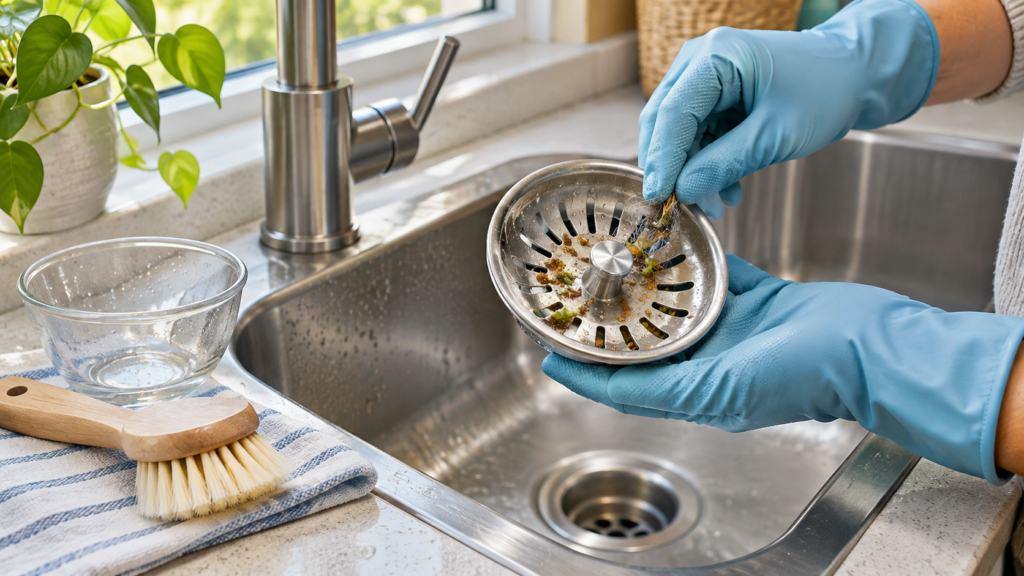
Drain maintenance starts with everyday habits: catch waste before it enters a pipe, clean accessible parts according to their instructions and notice changes in drainage. There is no single calendar that makes annual professional clearing necessary for every home. Useful timing depends on the task, how the fixture is used and the problems actually documented.
A strainer full of hair and a sewer line that repeatedly backs up need different attention. This guide helps you organize observations, choose the next step and keep a useful record. It concerns sanitary drainage in the building. It is not a maintenance program for a foundation drain, pump or industrial installation.
Before any routine check: if wastewater is backing up, stop uses feeding the affected section and seek help. Keep children and pets away from the water. Do not enter a flooded area where there may be an electrical hazard. A strong smell accompanied by illness also calls for leaving the area and obtaining appropriate help. Cleaning and further tests can wait.
Drain maintenance: name the task before choosing an interval
Routine care concerns surfaces and accessible parts intended for user cleaning. Internal cleaning addresses material inside a particular section of pipe. Inspection instead aims to explain a problem or document the accessible condition. These are different tasks, even when a service proposal mentions more than one of them.
For a fixture that drains normally and has no particular problem history, an annual reminder does not establish a need for professional clearing. A line with documented trouble may need agreed follow-up even after drainage returns. Ask which section the recommendation concerns, what the visit is intended to achieve and why that timing suits the findings.
Put a specific action in your calendar. “Empty the strainer and observe normal drainage” is understandable. “Do the drains” does not identify a fixture or explain why work is needed. A reminder can simply mean reviewing the record and checking whether a previous recommendation still needs attention.
During everyday use: keep waste out of drains
The easiest prevention starts before the pipe. Keep collected hair, dental floss, wipes and food scraps out of toilets. The City of Montréal’s toilet disposal guidance, in French explains why unsuitable waste can cause problems for drainage and wastewater systems. These basic habits are useful without inventing a cleaning interval.
In the kitchen, collect grease and scraps before washing dishes. Allow fats to cool and follow your municipality’s disposal instructions; collection rules can differ. A suitable basket or strainer catches accessible solids. It does not make pouring liquid grease into the sink a sound maintenance practice.
Make these habits easy for everyone: provide a bathroom waste bin, use a suitable sink basket and give visitors simple instructions where needed. Check municipal advice even when packaging makes a claim about a product being flushable. Changing disposal habits reduces unwanted inputs. It does not fix a defect already present in a line.
During housekeeping: look after accessible parts
Combine a visual check with ordinary housekeeping rather than assigning an arbitrary number of days to every drain. A busy shower may collect hair faster than a seldom-used bathroom sink. Empty the basket or hair catcher when its condition calls for it. A full accessory can itself become an obstacle at the opening.
At sinks, showers and tubs, remove only parts the fixture instructions identify as removable for user care. A grate, stopper and complete drain assembly are different components. Stop if a part resists or you do not know how it is attached. Forcing it may turn a simple cleaning task into another problem.
Record a missing part, loose grate or stopper that no longer works properly. These details help explain the next request without dismantling anything. A clean surface does not establish that the downstream branch is clear. Keep that distinction in your notes so a visual impression does not become an unsupported diagnosis.
Use the model instructions before a cleaning recipe
Identify the fixture and, where possible, its model before choosing a cleaner. Finishes, materials and assemblies can have different restrictions. For example, Schluter’s KERDI-DRAIN instructions distinguish access to the grate and limits on cleaning agents. They are an example of product-specific guidance, not instructions for every shower.
Do not schedule a dose of drain opener as an automatic substitute for observation. Health Canada’s household chemical guidance stresses following labels and never mixing products. A cleaner sold for home use can still cause injury. Keep its original container and safety information available.
If a chemical has already been poured into a blocked drain, retain its name and tell the plumber before work begins. Do not try to neutralize it with another substance. Avoid adding a boiling-water, vinegar or other recipe simply because an online calendar recommends it. Compatibility and the actual drainage problem still need to be considered.
Observe drainage without creating an incident
Ordinary use often provides the most useful comparison. Notice whether water now collects during a shower, whether the kitchen sink empties more slowly after dishes or whether an unusual sound accompanies another fixture. Describe what happened, where it happened and when. Avoid jumping from an observation to a specific cause.
Do not fill every fixture to test the whole system. A test may worsen a backup and make the sequence less clear. A brief observation during use that remains normal can be enough to start a record. If the level rises or another fixture receives wastewater, stop the test and request help.
Also record what has stayed normal. For example, one bathroom sink may be slow while the other fixtures appear unaffected. That helps frame questions without proving where the obstruction is. A short video or stopwatch reading cannot replace assessment of the pipe, access points and conditions relevant to the reported symptoms.
When to bring the next visit forward
New slow drainage, a returning blockage or several fixtures reacting together calls for reassessment. Waiting for the next housekeeping date adds no useful information. Our guide explains telling a local clog from a shared drain problem and the limits of home checks. Use it to organize observations rather than to name a hidden defect with certainty.
When an obstruction goes beyond accessible care, professional drain cleaning begins with assessing suitable work. Describe the fixtures affected, any return of the problem and products already used. Do not assume a particular method is suitable before the assessment. Restoring flow and investigating why it stopped can be separate steps.
A visible leak, unusual moisture or a loose component also changes the task. The issue is no longer simply removing debris from an opening. Protect the area from a safe position and report the change. A useful maintenance plan includes conditions that trigger earlier action, alongside any proposed date.
Create a short record for each problem being followed
Your record can be a single page or a shared note. Begin with the fixture and floor, followed by the first observation date. Describe the symptom in plain words. “Water enters the shower when the washing machine drains” communicates more than an unsupported conclusion such as “the sewer is broken.”
Add known previous work and available documents. Mark information supplied by a former occupant as unconfirmed if that is its status. A memory of cleaning does not identify which section was treated. Keep invoices and reports with the note rather than rewriting technical findings from memory.
End with the next action and the person responsible. That might mean finding instructions, reporting a change to the manager or requesting assessment. A useful record does not need to be long. It should let another person understand what is established, what remains uncertain and what needs to happen next.
After clearing: record the result and its limits
Ask which section was actually treated and whether the work restored a passage or documented a specific problem. Restored flow is a concrete result. It does not establish that every section of the drainage system is free of defects. Ask about any access or observation limits that affected the conclusions.
Keep four details together: the initial symptoms, the work date, confirmed findings and the recommended next step. If a later check is suggested, ask what question it is meant to resolve. A date without a purpose gives you little basis for deciding whether the visit remains relevant.
Record the signs that should bring follow-up forward. A new backup or return of the same slow drainage should be reported according to the advice received. Do not turn a recommendation for one line into a compulsory program for the whole home. The record should preserve the actual findings and limits.
A returning problem calls for different questions
When the same problem returns, review the record before repeating the same routine. Which fixture changed first? Has the time between incidents changed? Did the previous work concern the same branch? These questions help avoid comparing interventions that actually addressed different places or different symptoms.
Where intrusion has been documented, follow-up for tree roots in a sewer line concerns that line and its condition. Slow drainage alone does not establish roots. Do not add a root-treatment product based only on a suspicion. Ask what observation supports the proposed explanation and what remains unknown.
Clarify whether the recommendation aims to clear material, understand the condition or correct a defect. More frequent cleaning does not automatically replace a decision about repair. Equally, recurrence alone does not prove a full replacement is necessary. Look for the finding and the section of pipe that justify the proposal.
Seldom-used fixtures and floor drains
Give a rarely used fixture its own entry. Record how long it went unused, whether an odour appeared and when it became noticeable. Smells can have several causes. They do not establish that the inside of the pipe needs cleaning. Persistent odours warrant assessment rather than a succession of fragranced products.
Keep floor drains and known access points visible and accessible. Avoid covering them permanently with stored boxes or furniture. From a dry position, note visible debris at the opening, unusual water or recent marks around the drain. Do not remove an unfamiliar component to look farther into the installation.
If an installation includes equipment with its own maintenance instructions, use those instructions and the recommendations specific to that equipment. A pump, backwater valve or foundation drainage line is not a kitchen strainer. It may need a separate follow-up plan with suitable access and a clearly identified person responsible.
Shared buildings: agree on responsibilities
In a rental building or condominium, distinguish a fixture in one unit, its branch and the common sections. An occupant’s report is useful evidence of a symptom. It does not by itself settle responsibility for the work. Notify the owner or manager according to the building’s procedures and the urgency of the issue.
Collect reports with dates and locations. Two residents describing similar problems may not be describing the same pipe. A central contact can retain reports and give the professional a clearer history. Share the information needed to understand the problem and organize access, without adding unrelated personal details.
Before agreeing on a program, clarify who receives alerts, authorizes work and keeps the record. A commercial property also needs consideration of its actual equipment and use. A household routine found online is not a commercial maintenance plan or proof of regulatory compliance. Obtain advice appropriate to the building.
Compare the content of a professional maintenance proposal
A clear proposal names the section concerned and the objective. Ask whether the price includes access, the planned work, travel, taxes and a report. Terms can vary. This guide provides no ProDrain rate or guaranteed completion time. A useful estimate stays connected to the reported problem and the agreed scope.
Clarify limitations such as unavailable access, unknown condition or a necessary preliminary step. If inspection is proposed, ask what can be observed and what could prevent a conclusion. An accessible visual check is not a verification of every concealed pipe. The wording of the report should reflect what was actually done.
Finally, ask how the next visit should be decided. A known defect, documented recommendation or returning symptom may be relevant. A proposed interval should have an explanation tied to the record. You can then compare options on the work and information provided, rather than only on visits per year.
Build a personal drain care calendar
Start with three columns: the task, its trigger and the responsible person. A trigger could be the basket’s condition, ordinary housekeeping or written advice after an intervention. This keeps reminders connected to a reason. It also helps another occupant understand what completing the task actually means.
One line might say “kitchen strainer: empty when scraps collect; occupant.” Another might say “previously treated line: review the recommendation before the agreed date; owner.” These are examples of record organization. They are not technical intervals intended for every building or a direction to order unnecessary work.
Add a column for changes that should bring action forward. Drainage that slows again should not remain unnoticed until someone next opens the file. Anyone who observes a change should know who to tell and where the previous record is kept. A practical plan includes a reporting route.
When moving home or changing managers, transfer useful instructions and recommendations. Separate completed work from open actions. If a date has passed, first establish what it concerned and whether the work already happened. That avoids creating a duplicate request or mistaking an old reminder for a current finding.
Update the calendar after fixture replacement or work that changes the recommendations. Instructions for an old model do not automatically suit a new one. Aim for a simple document people actually use, with understandable tasks and a clear way to report the unexpected. More entries do not necessarily mean better maintenance.
Keep the handover practical
If someone else will be home during the visit, give that person the same short record and access information. They should know which fixture is involved and where previous documents are kept. Avoid leaving different verbal instructions with several people, since that can make the reported scope unclear.
After the appointment, check that the next step has an owner. A recommendation to investigate further is different from work already completed. Ask for clarification while the report is available if the wording leaves that distinction uncertain. This is how a maintenance calendar becomes a useful record of decisions rather than a list of unexplained appointments.
Drain maintenance questions
Should every pipe be cleaned each year?
An annual date alone does not establish a cleaning need. Separate prevention habits, accessible care and follow-up for a known problem. If a professional recommends an interval, ask which section it concerns, why it fits the findings and what symptoms should bring the visit forward. Keep that explanation with the record.
Can a calendar prevent every sewer backup?
No. Good habits can reduce unsuitable waste and help you notice change. They cannot guarantee the absence of a defect, obstruction or problem outside the dwelling. During an active backup, stop relevant water use and seek help. Do not wait for the next maintenance date or create another incident for a test.
What information helps before a visit?
Prepare the affected fixtures, circumstances, previous work and products used. Add a safely taken photograph if it shows something useful. Explain access constraints and identify the person responsible. Avoid tests that could create another overflow merely to obtain a video. An accurate description is preferable to a risky demonstration.
What if everything is draining normally?
Maintain prevention habits and clean accessible parts according to their condition and instructions. Keep access points clear and previous recommendations available. A reminder can mean checking open tasks without automatically ordering professional clearing. For guidance about a particular symptom, explore the Drains and sewers guides.