
Maintenance, prevention and water damage
Summer plumbing preparation: 10 checks before heat and holidays
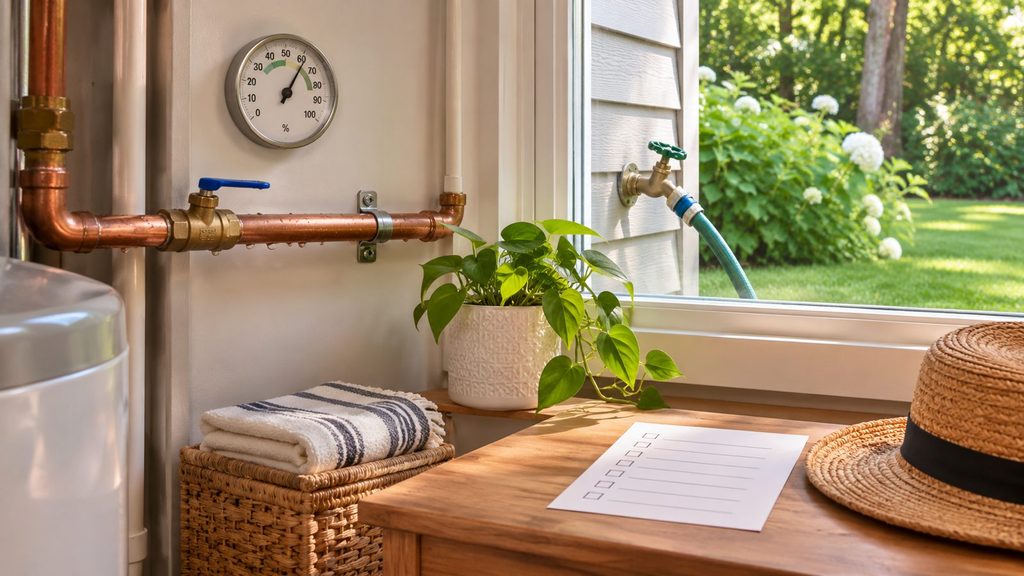
Summer plumbing preparation is less about performing preventive repairs and more about knowing where water enters, moves through, and leaves a home. Heat and humidity can make a cold pipe sweat without a pipe being broken. Outdoor watering can expose a leaking hose connection. A holiday can leave water sitting in little-used fixtures and a small leak unnoticed. These ten checks give Québec homeowners and tenants a practical way to observe their systems, reduce waste and plan for an absence without taking on unsafe work.
Deal with an active hazard first. If water is escaping, close a known, accessible shutoff for the affected fixture, or the main supply if you can operate it safely. Stay away from wet electrical outlets, equipment and panels; have qualified help assess them. Keep clear of sewage backup water. The routine observations below apply only when the area is safe and stable. They are not a diagnosis, and equipment-specific instructions take priority over a general checklist.
1. Walk through the water-use areas before the busy season
Look under sinks, behind an accessible toilet, at the washer connections, around the water heater and near the point where the private water supply enters the building. Watch for a fresh bead of water, a stain that has grown, a damp cabinet bottom, swollen material or an odour that returns after cleaning. If a mark is uncertain, take a dated photograph and compare it later. A dry old stain alone does not prove a current leak; a clean visible floor does not prove that a concealed line is sound.
You can place a dry paper towel beneath an accessible suspect connection for a short observation, then remove it. Do not leave damp material against wood. Avoid pulling out a heavy appliance or taking apart a pressurized joint just to inspect behind it. Note whether moisture appears after an appliance cycle or even when nobody has used water. A repeated drop, a growing stain or unexplained meter movement warrants a closer assessment. This short inventory also tells you which spots to revisit before departure and after you return, instead of checking the entire house from memory.
2. Tell cold-pipe condensation from a possible leak
Warm humid summer air can deposit droplets on a cold supply pipe or toilet tank. Condensation may spread across a cool surface and change with humidity, ventilation and cold-water use. A leak may originate at one fitting, continue after the surface has warmed, or wet nearby material in a pattern that does not fit simple sweating. Neither pattern establishes a diagnosis by itself. A small concealed leak can coexist with high indoor humidity.
Wipe a reachable portion dry and note where new water appears, without going near electricity. A hygrometer may help you track indoor humidity over several days. Health Canada’s moisture and mould guide advises controlling indoor moisture, checking basement pipes for condensation and insulating cold pipes where appropriate. Ventilation or a dehumidifier may help a damp room, but foam insulation should never be used to conceal a leaking joint. Dry the affected area and monitor it. If moisture is concentrated at a connection, penetrates a wall or persists after humidity falls, follow the fuller guide to looking for signs of a hidden leak and arrange an assessment.
3. Check outdoor taps, hoses and their connections
Run an outdoor tap briefly under normal conditions and inspect the handle, hose connector and the visible wall or pipe area. If a basement or interior wall becomes damp only while the outdoor tap is on, stop using it and have the cause located. A loose washer at a hose connector and a defect inside a wall are different problems. Overtightening or wrapping a leaking connection without identifying its source can cause damage or hide the symptom.
Uncoil the hose to look for cracks, worn couplings and a spray nozzle that no longer closes properly. See whether water pools against the foundation or drains into a neighbour’s property. When watering is finished, turn off the tap at its source; a closed nozzle is not a reliable shutoff for a long absence. Release hose pressure as appropriate for the equipment. If an automatic irrigation system must remain operating, identify its supply and program before changing a valve. A home with irrigation, a shared supply or other equipment that requires water needs a tailored departure plan, not a blanket instruction to close every valve.
4. Match watering to local rules and actual plant needs
Watering schedules differ across Greater Montréal municipalities, and temporary restrictions can change them. Check your own municipality’s current notice before setting a timer, using a sprinkler or filling a pool. The City of Montréal explains its water-use rules, including differences between portable and automatic watering, but those rules are not automatically Brossard’s, Laval’s or another city’s. A watering ban may narrow otherwise normal permissions during heat or supply constraints.
Aim water near roots rather than onto pavement, avoid windy conditions and see whether soil is actually dry before repeating a fixed schedule. The Québec government’s yard guidance recommends moderate watering, appropriate timing and respect for municipal restrictions. Fix a dripping hose coupling instead of simply extending the timer to compensate. A bucket beneath a connection can reveal waste, but it is a temporary observation, not a repair. For indoor habits and equipment, see the related guide to reducing wasted water at home. Actual savings depend on the home, equipment and weather, so a universal number would be misleading.
5. Observe where rain and irrigation water go
During a summer downpour, water may collect at a low point that also receives irrigation. From a safe location, see whether runoff moves away from the house or lingers beside a basement window or foundation. Check that visible eavestroughs and downspouts do not overflow with debris and that their outlets do not direct water against your own building or the neighbouring foundation. Health Canada recommends keeping these pathways clear and directing runoff away from the structure in its moisture guidance.
A puddle near the wall does not, by itself, prove a failed foundation drain. Nor does a dry surface rule out a basement problem. Grading, gutters, exterior waterproofing, soil and underground drainage are related but distinct. Record when a new seepage occurs and whether fixtures were being used at the time. Water rising through an indoor drain, sewage odour or a sudden change after heavy rain merits a different assessment from a hose leak. Do not enter backup water or attempt to open a pressurized sewer line. Taking a photo and noting weather, timing and affected rooms helps a professional distinguish stormwater, supply water and wastewater without assuming a cause.
6. Watch busy appliances and changes in drainage
Summer visitors, outdoor meals and extra laundry may increase water use. After an ordinary wash cycle, look at accessible washer hoses and the floor. After the dishwasher runs, look for new moisture around its accessible edges and under the sink. A new vibration, a bulging flexible supply, a recurring drip or a musty smell is reason to stop using the affected appliance and arrange a check. Follow its manufacturer’s maintenance and replacement guidance. You cannot determine the age or pressure rating of a hose simply by its colour.
Slow drainage at one basin differs from several fixtures slowing together. Note whether there is gurgling, toilet behaviour changes or wastewater rising elsewhere. Remove only surface debris from an accessible strainer if it can be done without dismantling the system. Do not combine drain chemicals, pour a cleaner into a drain that may later be opened, or keep running a fixture that backs up. Multiple affected fixtures or wastewater rising through a floor drain call for stopping the water uses feeding the system and having the cause assessed. A symptom does not identify whether a branch, main drain or municipal side is involved.
7. Locate the shutoffs you might actually need
Find the main water shutoff and any fixture-specific valves before a trip. Locations and valve styles vary, and a tenant or condo resident may not control a shared main. On a typical quarter-turn ball valve, a handle in line with the pipe usually indicates open, while a crosswise handle usually indicates closed. A wheel-style valve works differently. Do not apply a remembered rule to an unidentified control or a gas line.
If a valve is accessible and appears sound, a gentle check can show whether it moves and actually stops the expected flow at a fixture. Never force a seized or corroded valve, and stop if its stem starts to leak. A handle that moves but does not stop water is not dependable protection. Arrange repair of a faulty shutoff before making it central to a holiday plan. In a multi-unit building, ask the manager where the appropriate isolation point is and whom to call. Record the answer in a place another occupant can find; a label based on a guess can make a later emergency more confusing.
8. Plan a holiday shutoff without improvising at the heater
Decide in advance whether your home’s water supply can be closed without disrupting equipment that must remain supplied. Irrigation, certain building systems and shared plumbing change the answer. A sound, known shutoff may limit the volume of a leak while you are away, but it cannot guarantee there will be no damage. Make sure somebody knows how water will be restored and which fixtures should be checked. A hose or appliance left pressurized deserves specific attention even if you decide not to close the main.
Treat the water heater as a separate equipment decision. Do not switch off its electrical supply, drain the tank or lower its temperature solely because a generic vacation list says to. Correct shutdown and restart steps depend on the model, fuel or power source, tank condition and manufacturer’s instructions. Energizing a heater without sufficient water can damage it, and hot water can scald. Ask a qualified person for a procedure tailored to the installation if you are uncertain. Hydro-Québec’s hot-water advice discusses maintaining an appropriate tank temperature; do not invent a short-term savings strategy that compromises the system’s sanitary settings.
9. Return carefully and refresh water left standing
Before reopening a shutoff, look at accessible floors and connections. Restore water gradually in accordance with the valve and equipment instructions, then observe the fixtures for leaks. Follow the water heater’s restart directions rather than assuming an electrical switch is all that is needed. Do not energize wet equipment or open a live panel. A persistent colour, taste or odour change needs the local water authority’s advice, especially if an advisory is in force.
Water left in plumbing during a holiday is not the same as freshly supplied water. Health Canada’s residential plumbing water-quality guidance describes stagnation and advises flushing taps and showers unused for a week or longer, cold and then hot, while limiting spray and aerosol exposure. The appropriate process is different for a long-vacant property, private well or municipal water notice. For drinking and cooking, use cold tap water after it has run cold; follow local notices. If water remains unusual, ask the public water authority before consuming it. Boiling is not a remedy for every possible contaminant, and a clear appearance alone does not establish safety.
A house that was empty for several weeks deserves more care than one left for a weekend. Check municipal notices and the condition of any treatment equipment or filters before assuming that running a single kitchen tap refreshes every branch. Unused bathrooms and showers may contain water that has been sitting much longer than the kitchen line. Follow the appliance and filter manufacturers’ instructions for cleaning or replacement. Avoid directing the first spray of a long-unused shower into your face. If there is a private well, a building-wide system or a known lead concern, obtain guidance specific to that supply. Do not use water with persistent abnormal qualities as a do-it-yourself experiment. Record the duration of the absence and the fixtures that were unused, so a water authority or qualified professional can recommend the right next step.
10. Leave a short, usable plan for another person
Write down the locations of known shutoffs, the building contact, which appliances remain running and any pre-existing moisture to watch. A photo of the normal position of a clearly identified valve can be helpful. Do not label a control based on a guess. If a trusted person will check the property, explain which observations call for help: water on the floor, continuous running-water noise, a leaking appliance or a sewage smell. They do not need to repair anything. They need your contact information and the appropriate person to call.
Keep a return checklist as well: inspect first, reopen a closed supply under observation, refresh water at unused outlets and verify appliances before leaving them running unattended. Retain manuals for equipment with special steps. If you find a recurring drip, unreliable shutoff or unexplained dampness, arrange an assessment before the next departure. The aim is a few repeatable observations, not a seasonal overhaul. A small plan made while everything is dry is easier to follow than a long list first read during a leak.
Before-you-leave and when-you-return checklist
A few days ahead: locate accessible shutoffs, run normally used outdoor taps and compare any damp areas with earlier notes. Check the municipal watering notice and what an automatic system really does. Looking beneath an appliance just after its final normal cycle can reveal more than looking hours after everything has dried. If a defect is already visible, address it or stop using the affected equipment before leaving.
On departure day: close outdoor taps and supplies to appliances that do not need to remain on, following equipment instructions. If the installation allows it, use the known, working main shutoff. Leave a shared, seized or unidentified valve alone. Avoid a pressurized hose, and check that downspouts do not discharge at the wall. Share contacts and the agreed procedure with a trusted person without expecting them to undertake risky work.
On return: inspect before restoring water, reopen a closed supply gradually, then check joints and appliances. Refresh water at outlets that have been unused for the relevant period, following public-health and local water guidance. A new stain, meter movement without known use or a persistent water-quality change calls for focused follow-up. A private well, fire-protection equipment, multi-unit property or active municipal advisory may require a different process from this ordinary household checklist.
Summer plumbing questions
Does a sweating pipe always mean there is a leak?
No. Humid air can condense on a cold pipe. Dry a reachable area and observe whether moisture is spread over the cold surface or begins at a particular fitting. Persistent, localized wetness or damage to surrounding material deserves assessment. Do not cover a suspect joint merely to hide the water.
Should I close the main water supply for a weekend away?
It depends on your installation and equipment that needs a supply. A reliable accessible shutoff can limit a leak, but you should know how to restore service and follow appliance instructions. Do not operate a seized, shared or unidentified valve.
Should I switch the water heater off for a holiday?
There is no universal answer. Follow the manufacturer’s directions for your model and the length of absence. Ask a qualified person when uncertain. Do not drain the tank or cut power without an appropriate shutdown and restart procedure.
When is tap water ready to drink after I return?
After non-use, run the cold tap until it is fresh and cold, and follow Health Canada’s guidance for outlets unused for a week or longer. Respect municipal advisories. If abnormal colour, odour or taste persists, ask the water authority before drinking it.
Explore more household decisions in Maintenance, prevention and water damage.