
Toilets
Overflowing toilet: first steps and prevention
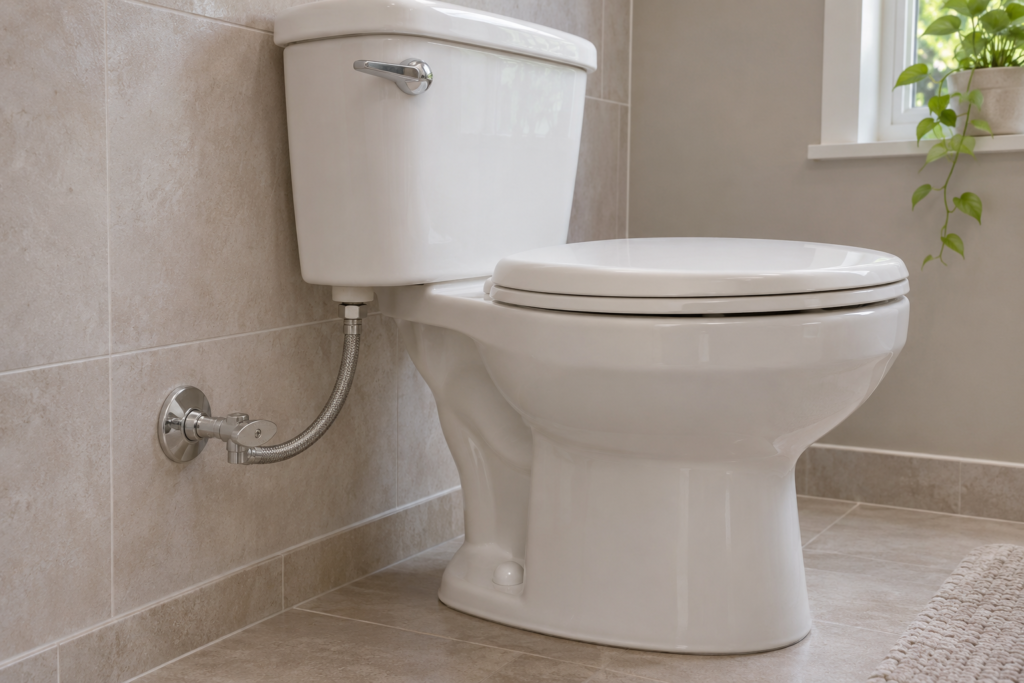
OVERFLOWING TOILET
An overflowing toilet calls for an immediate pause: stop flushing if water rises dangerously in the bowl. The priorities are to avoid adding water, keep people away and get help if the overflow continues. Cleanup and investigation come after making the situation safe.
First: stop using it, then isolate incoming water if safe
- Tell other occupants not to use the toilet. Do not press the flush control again to force the water away.
- Close the toilet’s supply valve only if you can identify it, reach it from a safe area and operate it without force. A seized, leaking or inaccessible valve needs assistance, not pliers.
- Keep children, pets and vulnerable people away from the contaminated area. Do not cross water to reach an appliance, outlet or electrical panel.
- Promptly tell the plumber and, in a shared building, the owner or manager about the overflow. Explain whether water keeps rising after the supply is closed.
Korky advises shutting off the supply and not flushing an overflowing toilet again. Closing the supply prevents further tank refilling; it does not remove water already there or block the sewer connection. Do not dismantle the tank or an unfamiliar mechanism during an overflow.
If the fixture valve does not stop incoming water, a broader shutoff may be needed. Use only a known control that is safely accessible; get assistance if it serves a shared supply or you cannot identify the right one. If people face immediate danger, move away and call emergency services instead of continuing hands-on work.
Can water still enter through the drain?
Closing the toilet’s clean-water supply does not stop wastewater backing up through drainage pipes. If water also rises in a shower, bathtub or floor drain, stop uses that discharge into the affected drainage system, including the washer and dishwasher. Do not restart an appliance to confirm what you have already seen.
In a multi-unit building, give those observations to the manager without opening shared pipes or a sewer access point. Several affected fixtures broaden the assessment. They do not, on their own, establish the obstruction’s location or who is responsible.
Rising bowl water and a running tank are different observations
A bowl that rises after flushing may have an obstructed outlet. A continuous refill sound may instead involve tank components. Both problems can occur together: continued incoming water is not harmless simply because a mechanism fault is suspected.
Kohler describes water continually passing from the tank into the bowl, including through the internal overflow, as a running-toilet symptom. That tank overflow is not a device that prevents a blocked bowl from spilling over. Sound alone does not identify which part to replace.
Once the immediate situation is safe, our guide to telling a flush mechanism fault from a blockage helps prepare the appropriate request. Water on the floor without an observed bowl overflow may have another source. Do not remove the toilet or caulk its base at random.
Choose the next step without recreating the overflow
A falling water level does not prove the cause has been resolved. Do not add a bucket of water, boiling water or chemical drain opener. If a product has already been used, keep the packaging and report its name and when it was added. Avoid plunging or tools that could splash that liquid; do not try to neutralize it.
Only after the overflow is controlled and access is safe, read what to try when a toilet is clogged to understand the limits of suitable methods. A suspected object, repeated incidents or an inaccessible obstruction calls for assessment rather than a series of attempts.
If the problem is confined to an obstructed toilet, toilet unclogging addresses that need. A fault in the fill mechanism, control, connection or fixture belongs to toilet repair or installation instead. An overflow does not automatically mean the fixture needs replacement.
The room needs attention as well as the toilet
Treat water spilled from the bowl as potentially contaminated even if it looks clear. Restrict access and avoid carrying soiled items into clean areas. If water is spreading, has entered floors or walls, or cannot be handled without exposure, have a specialist assess the cleanup.
Québec’s guidance on cleaning after water accumulation addresses electrical hazards, personal protection and materials that must be discarded when they cannot be adequately cleaned. Waterproof gloves and boots, eye protection and suitable clothing are among the precautions; they do not make a hazardous area safe to enter.
The cleaning approach depends on the surfaces and contamination. Follow product labels without mixing cleaners or improvising a recipe. Wash your hands after handling affected items, and do not let a dry-looking surface substitute for assessing soaked materials. Clearing the toilet and restoring a sanitary room are separate tasks. Ask what is included.
Prevent recurrence and keep useful records
Keep wipes, menstrual products, diapers and dental floss out of the bowl. Montréal explains what not to flush down toilets (in French). An accessible waste bin helps keep those items out of the drain.
Have a fill mechanism that will not stop, a sticking control or repeated blockages assessed. Locate the shutoff and its access in advance, without randomly adjusting tank levels or fitting replacement parts. Good habits do not repair a faulty mechanism or damaged pipe.
From a safe location, record the time, affected fixtures, actions taken and products used. Photograph damage only without exposing yourself, and keep invoices. Review questions to ask your insurer after water damage: coverage depends on your policy and the circumstances. Browse other flushing, filling and drainage topics in Toilets.
Useful observations make the service request clearer
Start with the sequence of events rather than a diagnosis. “The bowl rose immediately after flushing, then slowly dropped” gives the person taking your call more useful information than “the sewer is broken.” Explain whether you actually saw water cross the rim or found a puddle afterwards. Separate what you witnessed from what you suspect. This helps prevent an initial assumption from turning into a request for the wrong type of work.
Next, report what you already know about other fixtures. A shower that gurgled earlier or a washer that was running when the incident happened may be relevant. There is no need to run every tap to complete this description. Record existing observations without creating a fresh discharge. If you do not know whether another drain is affected, say so. An unanswered question is more useful than an unnecessary test that sends more water into a potentially obstructed system.
A short message you can prepare before calling
Try this sequence: “The toilet in the ground-floor bathroom overflowed at this time. We have stopped using it. Its supply valve is closed, open or inaccessible. The bowl level is still rising, steady or falling. We have also noticed this symptom at another fixture. A cleaning product was added, or no product has been used.” Give your address and callback number privately to the service provider, along with the best way to reach the entrance.
Mention access constraints such as stairs, a locked building door, limited parking, an animal that needs to be kept away or an occupant who needs mobility assistance. Describe the route to the bathroom without guaranteeing that it is safe for somebody else. The professional needs to assess their own protection requirements. A picture taken from a dry doorway can help explain the layout; getting a better photograph is never a reason to step into contaminated water.
Rental buildings and condominiums need coordination
In a rental unit, contact the owner or the building’s emergency contact as soon as the situation is stabilized, or sooner if water continues to rise. In a condominium, follow the known procedure for contacting the manager or syndicate. Give the time and the fixtures involved. Drainage may be shared between units. The person who notices a backup is not necessarily the person who caused it, and the visible location does not establish responsibility.
Ask the manager to coordinate any instructions about water use and access to shared areas. Do not arrange your own sequence of flushing tests in neighbouring apartments. Avoid operating an unfamiliar common valve or opening a drain cleanout. An access opening may release accumulated wastewater. Permission, responsibility and payment questions can be addressed separately from the immediate steps needed to protect occupants and prevent the incident from spreading through the building.
If you leave the bathroom, place a clear notice on the door and tell occupants directly that the toilet is out of service. A normal-looking bowl can mislead someone who did not see the original overflow. Arrange another toilet only in accordance with the instructions you receive. Where several fixtures are affected, another bathroom in the same building should not automatically be treated as an independent, usable alternative. Ask the person coordinating the response.
An isolated incident, a recurring problem or an unexplained puddle
An overflow after an unusual amount of toilet paper does not rule out an older drainage problem. Equally, one overflow does not prove that a pipe needs replacement. Explain the context: a first incident, slower flushing over several days, a repeating pattern or a change after recent work. Keep earlier invoices when available. An old diagnosis can provide background, but it should not be presented as proof of the current cause without a fresh assessment.
A problem that returns shortly after clearing deserves a discussion about what was addressed and what remains unknown. Ask what was removed or observed and which part of the system was involved. Restored flow alone does not document the condition of every downstream pipe. Further investigation may be appropriate depending on the findings. A camera inspection or structural repair should not be promised solely because a toilet has overflowed; each proposed step needs a clear purpose.
If nobody saw water spill from the bowl, report the puddle without assigning it a definite source. The supply connection, tank or a seal may require a different investigation. Water around the base is not an invitation to tighten bolts at random; porcelain can be damaged. Leave the fixture out of service until the source and conditions for resuming use are clarified. A visible wet area can be evidence of a problem without being enough to locate it.
Plan the room’s recovery as well as the plumbing work
Once active overflow stops, there are two separate follow-up tasks: restoring reliable plumbing and assessing wet materials. Ask who will handle each one. A plumber’s work on drainage may not include floor sanitation, moisture assessment or repairs to a ceiling below. Defining these responsibilities helps avoid a wet area being overlooked between contractors. It also lets you compare estimates for the actual work required rather than assuming that a single service includes everything.
Describe the visible path of the water: around the toilet, under a cabinet, towards a doorway or into a ceiling below. Do not lift contaminated flooring yourself just to confirm penetration. A tile surface that looks dry says little about hidden layers beneath joints or behind trim. Ask what inspection is proposed and how completion of drying will be assessed. Separate a room that looks presentable from materials that have actually been evaluated.
Health Canada discusses the special precautions needed when floodwater contains sewage. That guidance complements the provincial reference above; it is not a personalized cleanup protocol for your bathroom. If sewage contamination is suspected, seek advice from the appropriate cleanup professionals and public-health service rather than applying instructions intended for a small clean-water leak. The water’s appearance cannot settle that question.
Keep unaffected belongings away from the work area and agree on a clean route for necessary movement. Do not start a household fan in a contaminated room as an improvised drying measure. Discuss sanitation and appropriate drying first. Tools and materials used in the affected space need suitable handling too. Carrying a dirty mop or towel through other rooms can extend the problem, even when the original floor area was small.
Ask what makes the toilet ready for use again
Before returning the fixture to service, ask what the professional checked and what limitations remain. Was flushing assessed, did filling stop normally and were accessible connections checked for leakage? Did the work concern only the toilet or a section of drainage? If another investigation is recommended, ask what question it is intended to answer. This separates restored operation from a fully documented cause without treating a technical limitation as a guarantee.
Keep a record of replaced parts, their reference numbers when supplied, the work completed and the maintenance advice given. Ask about the warranty conditions that apply to the actual work. If symptoms return, those details make a follow-up call more precise. Cleanup decisions, building repairs and an insurance claim may require different supporting documents. Keep invoices, written advice and relevant photographs together so you can find them without recreating the whole incident later.
Make prevention easy for everyone in the home
Place a waste bin within easy reach in each bathroom and explain the disposal rules to guests without blaming anyone. Product packaging that suggests easy disposal should not automatically override municipal guidance. For children, a plain rule is more helpful than a technical explanation: toys, wipes and other objects do not belong in the toilet. Appropriate storage and a closed lid can reduce accidental drops, while adult supervision and practical habits remain important.
Do not remove tank components to create what seems like a stronger flush. An improvised alteration can introduce another fault without addressing drainage. If performance changed after a replacement mechanism was fitted, report that detail and locate the model instructions if you have them. Toilets do not all use the same parts or settings. A component advertised as universal still needs to be appropriate for the fixture and its installation.
Agree on a simple household response: when the level rises abnormally, stop and tell somebody. Water does not have to cross the rim before the situation deserves attention. Keeping the valve accessible, knowing whom to contact and reporting a change in flushing can reduce confusion during an incident. These habits cannot prevent every mechanical or drainage defect, but they make it easier to respond without turning an uncertain symptom into a larger spill.
What to include in a prevention follow-up
After the immediate problem has been addressed, choose a quiet moment to review what happened. Was the contact number easy to find? Did everyone understand which fixture was out of service? Could the professional reach the bathroom without moving stored belongings? These questions concern readiness rather than diagnosis. Make one or two practical changes, such as clearing the valve area or updating the building contact information, instead of buying several devices without understanding the original fault.
If you are considering a leak alarm, ask what it detects and what it does after an alert. A sensor on the floor may report water at that location; it does not identify its source or establish that hidden areas are dry. It also does not stop wastewater entering through a drain. Discuss placement and any connection to an automatic supply shutoff with an appropriate professional. Treat monitoring as an additional aid, rather than a replacement for repairs or a plan for responding.
Overflowing toilet: common questions
The water dropped by itself. Can I flush now?
A falling level only confirms that the level changed. It does not establish that the obstruction is gone or that adding water is safe. Keep the toilet out of service while the problem is assessed and report the change. Avoid recreating the overflow simply to test whether the first incident has ended.
Does an overflow mean I need a new toilet?
No automatic replacement decision follows from an overflow. The cause, fixture condition and repair options matter. A blockage and a faulty fill mechanism may require different work. Ask for an explanation tied to actual findings before approving a replacement, including what the proposed work is expected to resolve.