
Water heaters and hot water
No hot water or hot water running out quickly: what to check
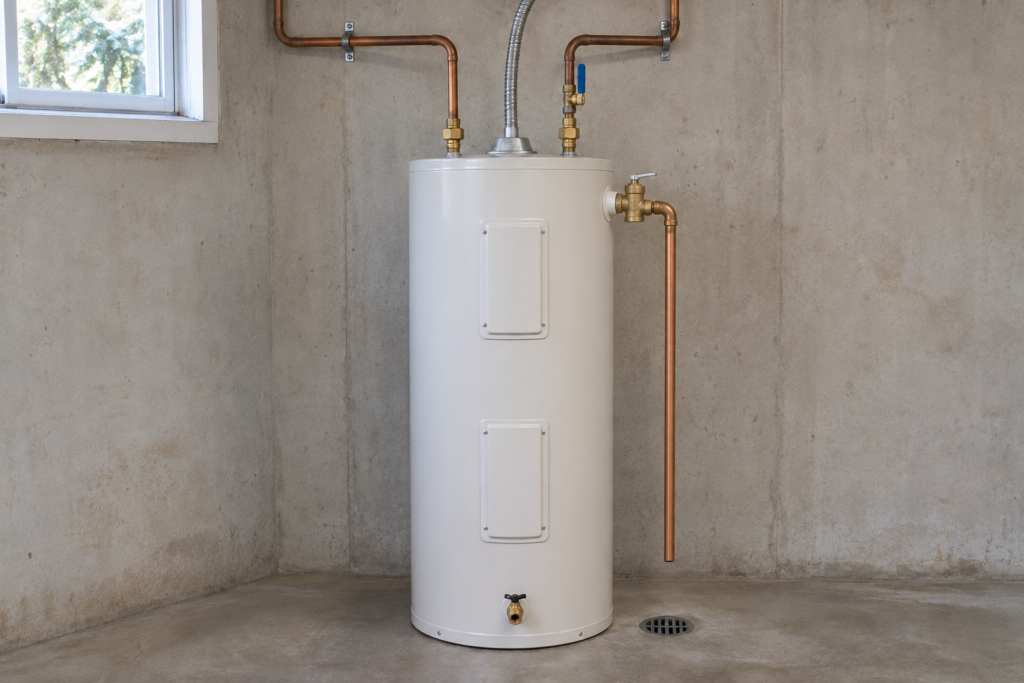
RUNNING OUT OF HOT WATER
Does the shower turn cold after a few minutes, or is there no hot water at all? Those are different situations. Before assuming the heater has failed or the tank is too small, establish where hot water is missing, when the change began and which uses preceded it. These observations prepare an assessment; they do not identify a part to replace.
This guide concerns hot water at domestic taps and appliances. It does not cover radiator heating or boiler pressure adjustments.
Rule out dangerous situations first
If you smell gas or a carbon monoxide alarm sounds, leave and call 911 from outside. Do not operate switches or devices near a suspected gas leak. If water reaches electrical equipment, keep away: do not cross a wet area to examine the heater.
Unusually scalding water, steam or active leakage calls for appropriate help, not further tests. Avoid contact with scalding water and mention these symptoms when requesting assistance. Never block a relief-valve outlet.
One fixture or several?
The shower is cold, but the sink still has hot water
Report that contrast. It directs initial checks toward distribution and the affected fixture’s operation without proving that the heater is entirely sound. A cartridge or mixing device is among the components a professional may need to examine; do not dismantle the faucet to check.
Several taps show the same change
Explain whether water flows normally but stays cold, or whether flow has also dropped. No water flow and no heat are different observations. For equipment shared by several units, ask the building manager which areas are affected and whether an interruption or recent work is known.
Use observations already made during normal use. There is no need to run several taps for a prolonged test: that would change the demand you are trying to describe.
Cold from the start or hot water running out?
The water no longer gets hot
Record the last time service was normal and any known event: a power outage, work or a recently replaced appliance. Note an already-visible display code without opening a panel. Do not reset a protective device or try to relight a gas appliance to continue checking.
It starts hot, then cools quickly
Describe the sequence of uses: showers close together, a bath or appliances drawing hot water during the same period. Compare that with previous habits. A sudden decrease in supply without changed usage calls for assessment rather than immediately buying a larger tank.
Depending on the model, the professional may need to distinguish demand, heat production and distribution. A failed electric element or damaged dip tube is among the possibilities manufacturers describe, but the symptom alone confirms neither. Request water heater diagnosis and repair and identify the equipment type; electrical or gas work belongs with the appropriate qualified trades.
Storage, recovery and peak demand
The volume printed on the tank does not describe its whole performance. Storage is a reserve; recovery describes output over a period and for a stated temperature rise. First-hour delivery starts with a fully heated tank. It does not promise unlimited flow.
Ask for your model’s specification sheet, including units and measurement conditions. Manufacturer tables distinguish these figures: a recovery rating is not a guaranteed wait until the next shower. Appliance type and operating conditions also matter.
To prepare for assessment, describe your busiest period and overlapping uses. A shortage after several closely spaced uses and a persistent shortage during low demand call for different checks. There is no single waiting time that applies to every water heater.
If assessment establishes that an equipment or capacity change is appropriate, arrange water heater installation or replacement. Compare the model, its performance and proposed adaptations, then review what a water heater installation quote includes.
Lukewarm water is not a reason to guess at settings
Explain whether the water never reaches its usual temperature or becomes cold after a period of use. Do not turn up the setting to conceal a hot-water shortage. Storage and scald protection at fixtures need to be considered together. The guide to hot water temperature and safety explains the distinction.
Prepare for the visit without working on the installation
- Brand, model, energy source and available records; photograph a label only if it is safely accessible.
- Affected fixtures, when the change began and the uses preceding it.
- Any return of hot water noticed later, without repeated tests.
- Leakage, a displayed code or recent work already observed.
- Access to the heater and the person responsible for shared equipment, where relevant.
Keep panels closed. Do not drain the tank, perform electrical tests, operate valves or change temperature settings to prepare for the appointment. Afterwards, ask for a conclusion that separates the confirmed cause, proposed work and assessment limits.
Common questions
If hot water returns later, is everything resolved?
Not necessarily. Record the approximate interval and uses between observations. Service returning does not, by itself, distinguish an unusual demand period from an intermittent problem.
Can a new appliance run short of hot water?
Yes. Its age establishes neither that capacity matches usage nor that the complete installation works correctly. Give the installer the model, start-of-service date and symptoms without changing settings.
Find more guidance in Water heaters and hot water.
Turn a vague complaint into useful observations
“We have no hot water” can mean several different things: a shower that turns lukewarm, every tap remaining cold, a long wait before warm water arrives, or a supply that previously covered the household routine and no longer does. Choosing the description that matches your experience helps the person arranging the visit understand the request. You do not need to identify a failed component before asking for help.
Start with a sentence that combines the location, timing and change. For example: “Since yesterday evening, the shower turns cold during use, while the bathroom sink was still hot around the same time.” That is more useful than saying the tank is finished. It gives the professional a starting point while leaving room to investigate the heater, distribution and fixture involved.
Do not delay a service request to produce a perfect report. An approximate time, clearly identified as approximate, can still help. If you do not know the model, storage volume or installation year, say so. Avoid moving heavy objects or climbing on an unstable support to reach a label. Information gathering should fit around safe access, rather than creating another problem.
Use a short record instead of a home testing routine
Write down four things: what used to work, what changed, which fixtures are affected and what hot-water uses happened beforehand. Add known interruptions or recent work without assuming they caused the problem. A power outage yesterday is relevant history; it does not, by itself, explain why the water is cold today. The distinction helps keep the service request factual.
If several people share the home, compare their observations before the call. Someone may have filled a bath before another person showered, even though that person thought the tank had not been used. A simple sequence of events helps describe the busy period. It does not replace the measurements or controlled checks that a qualified professional may need to perform.
Running out of hot water: four situations to describe
The first shower is fine and the next one turns cold
Explain the order of use and whether the same routine previously worked. A change with no increase in demand is relevant. So is a new schedule, more occupants or visitors using hot water close together. Neither observation automatically means a larger tank is needed. The assessment should connect actual demand with the performance and condition of the existing installation.
Once immediate hazards have been ruled out, spacing normal uses may reduce inconvenience while you wait for advice. Treat that as a temporary household arrangement, rather than a repair or proof that the system is sound. Do not deliberately run the supply cold to find its exact limit. That wastes water and can expose someone to changing temperatures during the experiment.
The shower is lukewarm while the kitchen seems normal
Report the difference between fixtures and any recent shower or faucet work. A local mixing or distribution issue may require a different assessment from a production problem. The professional can decide what checks are appropriate for the equipment. Avoid removing cartridges or adjusting temperature stops to prove a theory. Model-specific components require model-specific service information and safe working conditions.
Be clear about whether the observations happened at the same time. A warm kitchen tap in the morning and a cold shower at night do not establish that the heater supplied both correctly under comparable conditions. Tell the person arranging the visit what you actually noticed. It is useful to acknowledge that you do not know whether the circumstances were alike.
The whole home is affected after work was done
Find the invoice or work order if you have it and note the date. Explain whether the shortage began immediately after the work or appeared later. Contact the installer, service provider or person responsible for the equipment to ask about the next step. Do not alter connections to put something back the way you remember it; the installation needs to be assessed with its records and commissioning requirements.
A new appliance does not prove that its setup, distribution or match to demand is correct. Recent installation also does not establish that someone made an error. Keeping the description factual makes it easier to identify what needs checking and whether the follow-up relates to the original visit, an authorized adjustment or a separate issue. Keep copies of the instructions you receive.
Hot water returns but the shortage keeps happening
Keep a timeline rather than treating each return to normal as a lasting solution. Note normal periods, preceding uses and any message already visible on the equipment. The professional may ask different questions depending on the heater type. Avoid intentionally clearing a message by cycling the power. If you can read an accessible display safely, record the message exactly as it appears.
An intermittent problem may not occur during the visit. Explain what remains uncertain and ask how to document another episode safely. A photo of an accessible display may help; a video made while standing in water or reaching near electrical equipment does not. Your account of the event is useful even when you cannot capture a picture. Gathering evidence is never more important than staying clear of a hazard.
Read the equipment documents without mixing up the numbers
A water heater file may list litres, gallons, electrical input and other performance information. Those numbers answer different questions. Storage volume describes the tank. Input describes energy supplied under the equipment configuration. Neither number, on its own, promises a particular shower duration in a specific home. Ask which specification is relevant to the shortage you are experiencing.
When a document uses gallons, check which gallon unit it identifies instead of comparing the number directly with another sheet. Provide the exact model reference when requesting a quote and ask for comparisons in matching units. Similar product names do not establish identical performance, electrical requirements or connections. The full model information is more useful than a remembered label from a sales page.
The conditions beside a performance value matter as much as the value itself. Recovery stated for a particular temperature rise does not describe every season or operating mode. First-hour delivery is also different from a continuous flow. Have the professional explain the relevant indicator using the actual equipment sheet, rather than relying on a general promise that one tank size will suit every family.
Rental homes, condominiums and shared systems
If you rent, notify the landlord or responsible person through the building’s usual process. Describe the hot-water problem and any immediate hazards without deciding who must pay for repairs. Responsibilities and approvals depend on the circumstances. This guide is practical preparation for a service request; it does not replace an agreement or advice about a particular tenancy dispute.
In a condominium, explain whether the heater serves your unit or is part of a common system, if you know. A neighbour reporting the same change may provide useful context for the manager. It does not establish the cause. Do not enter a locked mechanical room or operate shared equipment to investigate a theory. Give the information to the person responsible for that system.
Before the appointment, confirm who can provide access and authorize work. Mention parking, elevator access and any restriction on reaching the equipment room. These details help organize the visit without sharing unnecessary personal information. For rented equipment, find the supplier’s name and available service documents so the responsible person can check the appropriate process before arranging separate work.
Questions to ask when the assessment is explained
First ask what cause was actually found and which observations support the conclusion. The explanation should distinguish a confirmed defect from a possibility that still needs checking. Next ask whether the issue involves the heater, a point of use or the distribution system. Understanding that distinction helps you see why the proposed work addresses the shortage instead of simply replacing an assumed faulty part.
If repair is recommended, ask which component is involved, what the work covers and what checks follow the repair. Ask about the limits as well: what other issue might remain, and when should you call back? A clear explanation is more helpful than a broad assurance that a new part must resolve every symptom. Keep the work order with the equipment records.
If replacement is recommended, ask why repair or a practical change in use would not meet the need. Have the proposed model connected to your busiest period of demand. Costs, warranty terms and connection changes belong in the quote. Keep the model reference and documents supplied at the end of the job, so a later service request starts with accurate information.
After the work, follow the instructions provided and observe the return of service during ordinary use. You do not need to provoke a shortage to validate the repair. If the symptom returns, refer to the original record and explain what is the same and what is different. That makes follow-up more precise and helps separate the initial complaint from a new behaviour.
Make a useful plan for the next day
When a service visit cannot happen immediately and no urgent hazard is present, ask the responsible professional what temporary arrangements suit your situation. Tell them about the household’s essential needs and the equipment type. Avoid treating a neighbour’s reset procedure or an online video for a different heater as an instruction for yours. Similar-looking tanks can have different controls and service requirements.
Organize access before the appointment: secure pets away from the work area, make the route clear without disturbing pipes or wiring, and keep the equipment documents together. If the installation is in a common area, arrange access through the manager. These practical steps help the visit start efficiently while leaving the technical inspection and any necessary isolation to the appropriate qualified person.
Confirm the next step before ending the call
Summarize who is attending, who will provide access and which documents still need to be supplied. Ask what to do if conditions change before the appointment. A shortage without other symptoms and a new active leak may need different priorities. Report a new hazard promptly, rather than continuing to gather observations. Keep the service provider’s instructions with your original notes so everyone in the household understands the same plan.
If you are arranging the visit for another person, pass along the actual observations and make clear which details are second-hand. Avoid presenting a guess as a measurement. Confirm that the person on site can explain the normal routine and describe the change. That continuity is often more useful than a long list of possible failed components copied from the internet.
Sources
- Natural Resources Canada: Water Heater Guide, 2012 (PDF), peak demand and first-hour rating.
- A. O. Smith: Voltex AL Connected specification sheet, December 2025 (PDF), an example of separate storage, recovery and first-hour figures, not a model recommendation.
- Énergir: what to do if you suspect a gas leak.
- Québec: carbon monoxide poisoning.