
Leaks, faucets and fixtures
Frozen pipes: how to prevent freezing and respond safely
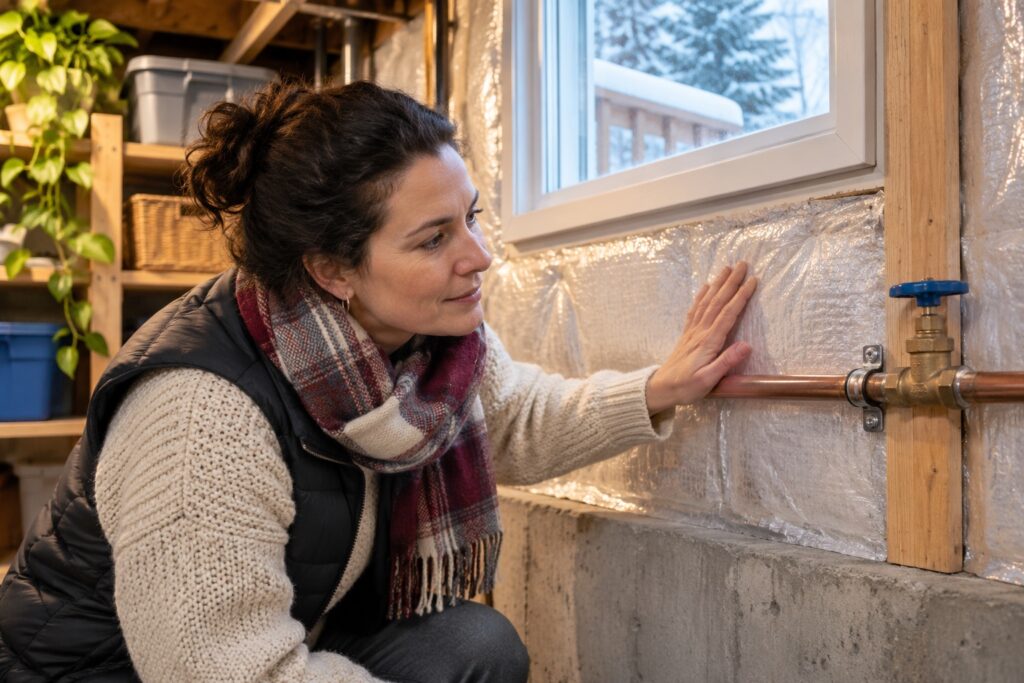
With frozen pipes, a faucet that slows to a trickle during a cold snap deserves attention, but low flow alone does not prove that a pipe has frozen. A municipal interruption, a fixture fault, or a problem limited to the hot-water side may look similar at first. Check which taps are affected without taking anything apart. Locate the indoor main shutoff if you can reach it safely. A frozen line can crack, and a leak may only become visible as the ice melts and pressure returns. The immediate goal is to protect people and the building while establishing where the flow has stopped.
If water is already escaping, keep people and belongings clear. Close the indoor water supply if you know which valve to use and can reach it on a dry, safe route. If water is near an outlet, appliance or electrical panel, stay out of the wet area and have the electrical hazard addressed. Hydro-Québec's water damage guidance explains that safety boundary. Our separate guide on what to do if a pipe bursts covers an active rupture. Here, the focus is preventing a freeze and responding to weak or absent water flow before a failure is confirmed.
How frozen pipes happen in a heated home
To understand frozen pipes, remember that a comfortable living room does not tell you the temperature beside a water line at an exterior wall. Cold air can enter a garage, crawl space or basement opening and wash over one short section of pipe. The Québec master pipe-mechanics corporation, CMMTQ, notes that ice can form in plumbing even when the general indoor temperature remains above freezing. Exposure, insulation, drafts, how long cold persists and whether water is moving all matter. A closed cabinet or unheated service area can have a very different climate from the nearest thermostat.
When water freezes and expands, it can block flow and stress the line. The place where a pipe breaks is not necessarily the place where frost is visible. Do not treat one clear section of pipe as proof that the hidden length is sound. Ice may temporarily hold back water from a damaged connection; when it thaws, water under pressure can escape into a wall or ceiling. Restored flow is a point at which to inspect carefully, not automatic confirmation that the incident is over.
Outdoor taps, supply lines near windows, and pipes along exposed walls deserve special attention. Concealed pipes can be just as vulnerable even though their condition is harder to see. In a multiunit building, one resident's loss of flow may also involve a shared supply or another unit. Tell the person responsible for the building promptly and describe exactly which fixtures lost water. Avoid guessing from the location of a single faucet that you know which segment has frozen.
Prevent frozen pipes before a cold snap
Walk through the accessible service areas before winter. Find where the water service enters the building and identify the indoor main shutoff. Note any branches running through a garage, crawl space, unfinished basement or exterior-wall cabinet. Keep the shutoff free of stored boxes. A simple label and a photo can help other occupants find it in a hurry. If a valve is seized, badly corroded or unfamiliar, arrange to have it checked rather than forcing it during an emergency.
The City of Montréal recommends keeping the air around the water service entrance at 10°C or warmer. That advice concerns the service-entry area; it does not guarantee that every branch in the building is safe. Look for drafts around windows, doors, wiring penetrations and ventilation openings. To prevent frozen pipes, foam sleeves on accessible pipes may help reduce heat loss, but insulation does not create heat or correct a strong cold-air leak. A pipe inside a wall or beside electrical components needs an assessment suited to its actual installation.
Disconnect garden hoses before freezing weather. Where the plumbing is designed for it, close the supply to outdoor faucets and drain the exposed section according to the installation. An attached hose can retain water at the connection. Even a faucet sold as frost resistant depends on proper installation and use. If you cannot identify the indoor isolation valve, or the outdoor tap keeps dripping after the line is drained, ask someone familiar with the system to explain its arrangement. Guessing can leave water trapped exactly where protection is needed.
Frozen pipes: insulation, warmth and water movement do different jobs
Pipe insulation slows heat transfer; it is not a heater. A line left for a long time in an area below freezing may still freeze even inside a sleeve. The location of the line, the quality of air sealing, room heat and water circulation all affect the outcome. If a branch repeatedly freezes inside a wall, simply hiding it under more finish will not establish a lasting fix. Ask for an assessment of the route and the source of cold air.
During severe cold, open sink-cabinet doors when doing so lets warm room air reach the plumbing. Move cleaning products out of reach of children and pets while those doors are open. Check little-used rooms and service closets separated from the rest of the heating system. A power failure or prolonged heat outage can change conditions quickly. If you will be away, have a trusted person check the home and know how to contact you if heat or water service changes.
For some frozen pipes risks, Montréal sometimes advises a thin stream of water during extreme cold to keep water moving. That is a situational, temporary measure that uses water and assumes the drain is clear and can be watched. The city warns about overflow if a drain is blocked. A trickle does not repair a poorly located pipe and is not a dependable response to a line that is already frozen. If the sink drains slowly, the property will be unattended, or your municipality gives instructions for your service, account for those conditions first. Never leave a faucet running into a basin or appliance with uncertain drainage.
Going away in winter or losing heat
Plan for more than a thermostat setting when leaving a building during winter. Arrange for someone to notice a heating failure, open window or new leak. Show that person the indoor water shutoff and provide a way to reach you. Remote temperature alerts can be useful, but they cannot confirm conditions at a hidden pipe or check a damp floor. Wind, insulation and heating performance change how quickly different parts of the building cool.
If a house will be left unheated, turning the thermostat down is not the same as winterizing its plumbing. CMMTQ describes a detailed approach to draining supply lines, fixtures, traps and, where appropriate, the water heater. Systems differ. A private well, hydronic heat, fire sprinklers, connected appliances and building rules may need specific arrangements. Ask a qualified person to plan the shutdown for the actual property. Do not improvise with antifreeze, disable an essential protection system or put automotive antifreeze into a drinking-water line.
If the heat fails while you are home, watch the colder areas and contact the appropriate heating or utility service for safe restoration. Do not use a barbecue, camping stove or other fuel-burning equipment not intended for indoor heating. Trying to save a pipe does not justify a fire or carbon-monoxide hazard. If you have to leave the building, notify the property manager or owner and ask how the water system should be protected. A planned shutdown is easier to reverse safely than an improvised one.
Weak or absent flow: look for frozen pipes without jumping to a conclusion
Write down when the change began and the recent outdoor conditions. Compare hot and cold water at a few fixtures. Is one tap affected, one room, or every tap in the building? A single affected fixture may point toward its own branch or faucet. No water anywhere may raise a question about the service entry or distribution network. Neither pattern locates the fault with certainty. Ask a neighbour or building manager whether a water interruption has been announced, while responding immediately to any visible leak inside your property.
Look only at accessible pipes, without opening a wall, moving material that might hide wiring, or touching a wet area near electrical equipment. Frost, a bulge, a split or seepage on a visible line is a reason to stop experimenting and seek help. A pipe with no visible frost can still have an ice blockage inside a wall. When frozen pipes seem likely, photograph the general route and any visible change. Those images can help a plumber understand the report, although a photo alone cannot confirm the condition of a concealed joint.
Consider what happened just before the loss of flow. Was a valve closed for maintenance? Did the municipality announce work? In a home supplied by a well, a pump or electrical problem may stop the water. If only hot water is missing, the cause may involve the water heater or its side of the system rather than the exposed cold-water service. Do not remove a heater cover or open an electrical panel to test these possibilities. Describe the pattern of symptoms when you call so the right service can begin with a sensible hypothesis.
First steps when a line appears frozen
Keep people away from wet flooring, distorted pipe and exposed electrical equipment. Know how to close the indoor supply if a leak begins. In Montréal, do not operate the outdoor municipal service valve; city staff handle that equipment. A towel or container may catch a small, visible drip if it is safe to approach, but do not stand under a sagging ceiling. If water is flowing heavily, focus on the shutoff and safety. The burst-pipe guide addresses that situation in more detail.
The City of Montréal describes controlled warming methods for accessible pipes in dry, closely supervised circumstances. Water near electrical equipment, an unknown pipe condition or combustible material changes the risk. A cautious first action is to restore normal room heat and let heated indoor air reach an accessible pipe, such as by opening a cabinet door. Do not use a torch, open flame, boiling water or an electrical appliance in a wet area. If you cannot identify the location, see damage, or cannot restore flow with ordinary room warmth, ask for an assessment instead of escalating a home experiment.
Do not strike a pipe or force a frozen fitting. Sudden heating and uncontrolled pressure changes can worsen a weak joint or release water behind a finish. A few drops at a faucet do not prove that the line is fully open. Keep the indoor shutoff accessible and watch adjoining rooms as water returns. If a split or new moisture appears, close the supply when safe and have the plumbing checked before normal use resumes. A professional may need to verify both the immediate obstruction and the integrity of the line.
Private plumbing or the public water system in Montréal
The City's frozen-pipe reporting page offers a practical way to decide whom to call. If another indoor faucet still has water, the private portion may be involved; the City directs residents to a plumbing company for that portion. If no indoor faucet has water, an outside segment may be involved, and residents should report the situation to 311 for municipal assessment. This is a triage clue, not a definitive diagnosis. Procedures and responsibility may differ in municipalities outside Montréal.
Have the property address, affected taps, time the issue appeared and visible observations ready. Municipal staff can explain the next step and whether their team needs to visit. A line between the house and property boundary presents a different ownership question from a pipe in the street. Let the responsible parties determine the exact portion; do not excavate or operate a municipal valve as a test. Elsewhere in Greater Montréal, contact the local municipality through its own water-service channel rather than assuming Montréal's procedure applies.
If the City instructs you to keep a small flow after its work, follow that specific guidance and check that the drain can cope. Ask when the temporary measure should stop and what still needs inspection on the private installation. Write the instruction down if multiple residents or managers need to follow it. A direction given for one service line is not blanket advice to run water continuously in every home.
When to call a plumbing company
Seek an assessment when flow does not return, the pipe is concealed, bulging or split, a leak appears, or the same area freezes repeatedly. A multiunit installation, fire-protection piping, water heater or unusual connected equipment also requires care beyond a generic thawing tip. Describe the observed signs and what you cannot access instead of requesting a simple thaw without inspection. The professional can work out what should be examined and whether the water can safely be restored.
A useful diagnosis addresses three questions: where has flow stopped, was the pipe damaged, and why did that section get cold enough to freeze? The solution may involve repairing a section, stopping a draft, improving heat distribution or changing a pipe route. After frozen pipes, the return of water alone does not establish a sound line. Ask how the plumbing will be checked under normal conditions and what nearby areas should be watched afterward. Repeated freezing points to an exposure problem that deserves a preventive correction.
If you suspect a leak after thawing, ProDrain's water leak detection and repair service explains the relevant service scope. Tell the team whether you shut off the water, whether a wall or ceiling is damp and whether electricity is nearby. A phone conversation can guide triage, but it cannot prove where the freeze or leak occurred. Use the contact page for the available ways to share details.
After frozen pipes thaw: check before normal use
As flow comes back, observe accessible fittings, walls, ceilings, baseboards and flooring. Listen for new sounds and note unexplained meter movement when ordinary water use has stopped. These clues can reveal a problem but do not replace an appropriate professional inspection or test. A small leak inside a cavity may take time to reach a visible surface. Keep the shutoff reachable until the situation is understood.
If an area is wet, resist painting or closing the finish immediately. Find and correct the source, then determine which materials need drying or removal. Electrical safety takes priority if water reached equipment or wiring. Keep photographs and dates so changes can be compared after flow returns. When moisture appears without an obvious source, our hidden water leak guide discusses investigation without presuming that freezing caused the problem.
Return to the conditions that allowed freezing. Was the pipe hit by a draft, cut off from room heat by a closed door, or left vulnerable during an absence? Repairing one damaged fitting without addressing its exposure may leave the same risk for the next cold snap. Ask what changes fit the building and who should carry them out. Spring plumbing checks after winter also matter, especially when outdoor taps are put back in service.
Make the call easier to triage
Explain whether the problem affects one faucet, one room, hot water, cold water or the entire home. Provide the first time you noticed it, the duration of severe cold, whether heat is working, which pipes are visible and whether there is a leak. Mention if the property is rented, shared or supplied by a well. Say which valves anyone touched and whether you received municipal instructions. A wide photo of the area and a close image of visible damage are more useful than a guess about the exact pipe material.
Ask what will be checked first, how damage will be ruled out and what must be confirmed before full water use. If opening a wall is proposed, ask why that location is useful and how the area and nearby electrical components will be protected. Separate the immediate response, repair of damage and later preventive improvements. Access, hidden conditions and the work required after thawing all affect the scope; one low-flow symptom cannot support a universal price estimate.
The leaks, faucets and fixtures category gathers related supply and water-damage topics. Use those guides to describe your situation, but do not delay action for an active leak. A sound decision starts with safety, then locating the loss of flow and verifying that the system remains watertight after water returns.
Frequently asked questions
Prevention and early signs
Can a pipe freeze while the house is heated?
Yes. A line at an exterior wall, in a garage or in a drafty service space may be far colder than the main room. CMMTQ warns that freezing can occur even when the building's general indoor temperature is above zero. Examine the actual exposure and airflow around the line. The living-room thermostat is not proof that every hidden branch is protected.
Should I leave a faucet running all night?
Montréal mentions a thin stream during extreme cold and warns about blocked drains. It is a temporary, situational measure that uses water and depends on safe drainage and monitoring. It does not correct the cause of repeated freezing. Do not leave water running into a slow sink or an unattended fixture with uncertain drainage. Follow specific municipal instructions for your service when they apply.
How do I tell whether the City's pipe is frozen?
In Montréal, compare indoor taps. Water at one fixture but not another may suggest a private branch. No water at any indoor fixture may point toward an exterior portion and warrants a report to 311. The pattern guides whom to contact, but it cannot establish the exact property boundary or fault. The City and a plumber assess their respective portions.
After thawing and repeated freezes
Does restored water flow mean the pipe is undamaged?
No. Ice can temporarily hold back leakage from a damaged line. Watch accessible pipes and nearby surfaces as flow returns and afterward. New moisture, unusual sounds or unexplained water use needs investigation. If a leak starts, close the indoor supply when you can do so safely and seek help before putting the system back into normal service.
Can I use a torch or boiling water to thaw a pipe faster?
No. A flame can start a fire, and intense heat can damage materials and joints. Electrical appliances are unsafe in a wet area. Restore ordinary room heat and seek an assessment for an inaccessible, damaged or persistently blocked pipe. Speed is less important than avoiding a rupture, burn or electrical hazard.
What if the same pipe freezes every winter?
Ask for an assessment of the pipe route, insulation, air leakage and heat reaching that area. A one-time repair or seasonal trickle may leave the underlying exposure unchanged. Keep the dates and photos from previous episodes. A durable solution depends on the actual installation and building constraints, rather than a universal product or a guessed fix.