
Leaks, faucets and fixtures
Burst pipe: immediate steps to limit water damage
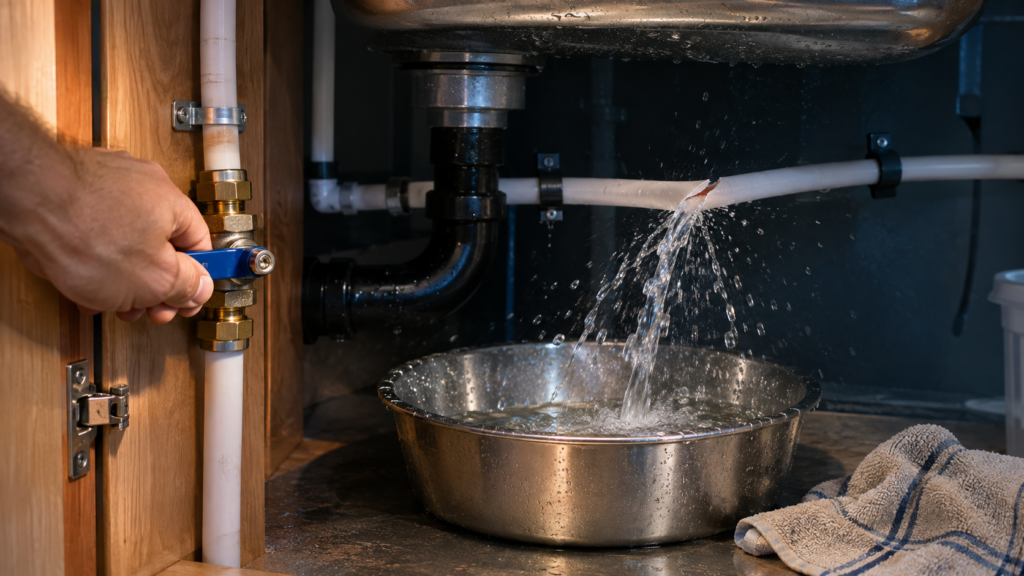
What should you do if a pipe bursts? First, keep people away if water has reached an outlet, appliance, wire or electrical panel. Never cross standing water to reach a switch or valve. If you have a dry, safe route, close the shutoff that feeds the broken line, or the accessible main water shutoff when the branch is uncertain. Alert anyone else affected. Arrange plumbing help and, when building materials are wet, an assessment of drying needs. A bucket and towels cannot replace stopping the supply. If you cannot approach safely, leave the area and call the appropriate emergency service.
A burst supply pipe can release much more water than a slow, accessible leak. This guide focuses on the first decisions, safety and preventing further damage. It does not ask you to open a wall or improvise a repair on a pressurized line. Our separate leaking pipe guide discusses the limits of temporary repairs after a smaller leak is accessible and under control.
The safe sequence at a glance
- Check hazards before chasing water. Move back if water is near electrical equipment, a sagging ceiling, dirty water or a hot appliance. Injury, a possible shock hazard or a blocked safe exit calls for emergency services.
- Stop the water if you can reach the correct valve safely. Use a known fixture shutoff when it clearly serves the broken line; otherwise use the accessible main shutoff. Do not force a seized valve.
- Confirm the flow decreases. Watch from a safe place. If the stream stays strong, the valve may not isolate that line. Do not keep experimenting as the area becomes wet or hazardous.
- Tell the people who need to act. In a rental, notify the landlord or property manager. In a condo, contact the syndicate or whoever controls shared valves. Alert neighbours if water may reach their unit.
- Arrange the next work. Ask a plumber to find the break and make a durable repair. Record damage when safe, then seek advice about wet materials and your insurance policy.
You do not need to identify the exact failed fitting before taking these steps. A rushing sound, reduced pressure and water on the floor are clues, not a diagnosis. Water dripping from a ceiling may originate in a different room or unit. Do not open a ceiling to investigate while the supply and electrical hazards are unresolved.
When to step away and stop acting
Hydro-Québec warns that water at electrical equipment can cause electrocution. Stay away from a panel near water. Do not touch wet outlets, extension cords, switches, appliances or wires. Do not cross a puddle to turn off power or water. If you cannot reach the electrical shutoff under completely dry conditions, leave the hazardous area and contact Hydro-Québec. Call 911 if a safe exit is impossible or someone is in immediate danger. A master electrician should inspect water-affected electrical installations before power is restored. Plumbing and electrical safety may require separate professionals.
Stop as well if a ceiling bulges or sheds pieces, the water may scald, you smell gas, there is a sewage odour suggesting a backup, or the structure appears unstable. A burst potable-water pipe does not mean every puddle remains clean: water may mix with waste, household chemicals or drain water. Keep children and pets away. Reaching behind a wet electrical appliance for a valve is not a reasonable way to save a few seconds.
If you smell gas, leave and follow the gas supplier’s or emergency responders’ instructions; do not operate switches in the affected area. Water escaping near a water heater can be hot. Never plug a relief valve or its discharge line to stop a flow. Those conditions call for more than routine household cleanup.
Find the right water shutoff without making the break worse
The small valve beneath a sink often serves a faucet or dishwasher, but it may not isolate the whole branch hidden behind the cabinet. A valve beside a toilet can isolate the toilet without closing a pipe inside the wall. Main-shutoff locations vary by building. Look for one only along a dry, safe route; do not shift heavy appliances or stored items during an emergency. If you do not know what a valve controls, ask the manager or plumber. The wrong valve may interrupt water to others while leaving the break active.
A quarter-turn handle commonly closes when perpendicular to the line; other valves use a wheel. Turn gently by hand, without a tool for extra force. A handle that sticks, leaks around the stem or seems ready to break is a reason to stop. Tell the plumber what happened. If the main shutoff is shared, locked in a service room or outside your access, reach the person authorized to operate it. Do not open a municipal meter box or unknown installation on a guess.
After closing a valve, observe the flow. A line may drain briefly, but the stream should diminish. If it does not, the source could be another supply, another unit or a faulty shutoff. Do not declare the burst controlled simply because a tap is off. Leave the water isolated until the cause and repair have been checked. Do not reopen it as a test while outlets or building materials remain wet.
If you cannot stop the flow yourself
Tell the plumber and building manager where water is escaping, which room is involved, which valves you can access and whether electrical equipment is nearby. Mention immediately if water is crossing a ceiling, entering another unit or filling a basement. A container may catch some spray only if you can place it without exposure; it must not delay isolation by someone who can operate the proper shutoff. Do not try to grip a split pipe, connector or supply hose while it is under pressure.
If you must leave, notify the appropriate people and keep your phone available. Do not return to retrieve possessions from a dangerous area. Closing a door can keep people out but does not contain water. Water can travel along floors, pipe openings and cavities, so the visible puddle may understate the affected area.
Limit damage after the area is safe
Once the supply is off and electrical conditions have been made safe, move still-dry belongings away from the water’s path. Relocate documents, unplugged small appliances and textiles when this does not require risky lifting. Put containers under remaining drips and use towels to limit spread to adjacent surfaces. Do not plug in a wet vacuum, fan or dehumidifier beside a wet floor or outlet that has been affected. Obtain an electrical assessment when needed.
From a safe position, take photographs or a short video showing the point of discharge, the valve you closed, affected surfaces and damaged belongings. Note roughly when you discovered the break and when water was shut off. Keep removed parts only if the plumber or insurer says it is useful and doing so is safe. Save invoices for emergency work and cleaning. Documentation helps establish what happened, but it should never delay the shutoff or evacuation from a hazard.
The next concern is water retained in materials. Québec’s public-health guidance recommends thoroughly cleaning and drying water damage within 24 to 48 hours to limit mould growth. That is a prompt for action, not a promise that a wall will dry without inspection. Gypsum board, insulation, flooring and upholstered furniture can hold moisture after a surface feels dry. Seek an assessment suited to the area and the materials involved. A musty smell, stain, swelling or bubbling paint can signal concealed moisture.
Clean water, dirty water and cleanup: do not guess
A broken supply line and a backed-up drain need different precautions. If water clearly came from a potable line and has not crossed contamination, limited cleanup may be reasonable once the site is safe. If it passed through a drain, sewer, waste, chemicals or an area of unknown condition, do not treat it as clean water. Keep children and vulnerable people out. An unknown source warrants assessment before porous materials are handled.
Québec’s cleanup guidance for accumulated water says to check electrical and structural hazards, document damage and use protection suitable for dirty water and debris. It also recommends keeping vulnerable people away from cleanup. Gloves, boots and a mask do not make an energized or unstable space safe. Seek a specialist when contamination, volume or affected materials exceed what you can manage safely. Do not mix cleaning chemicals in an attempt to disinfect faster.
Four situations that change the next call
A spray under a sink with an accessible valve and dry floor. Gently close the valve you know serves that line. If the flow does not decrease, use an accessible main shutoff. Keep electrical appliances clear of water. Photograph the area after the spray is controlled, then have a plumber identify the failed component. Even if the cabinet looks intact, check its base, the adjacent wall and flooring for retained moisture.
Water descending through a ceiling or across several units. Do not open the ceiling to find the line. Move occupants away if it sags or water nears lights. Contact the manager, condo syndicate or landlord at once to locate the appropriate shutoff and alert other units. A plumber should determine the source; an electrician may need to assess affected circuits. Document each affected area only from a safe place and with permission.
A break beside a water heater, hot water or a wet floor. Do not touch the appliance, its electrical controls or a hot line from the wet area. Isolate the water only from safe access and tell the professional which appliance is involved. Never block a safety relief discharge. Report whether water visibly emerges from a supply line, tank, fitting or safety outlet. These are observations to aid diagnosis, not proof of the failed part.
An inaccessible valve or water spraying inside a wall. Having an authorized person close the main supply matters more than finding the exact hole yourself. Report water near an outlet, panel or neighbouring apartment. Request an appropriate response and leave wall openings to professionals after hazards are controlled.
Who to call: plumber, electrician, building manager and insurer
The plumber identifies the break, isolates the right section and proposes a durable repair. Water leak detection and repair belongs to that stage, after immediate safety measures. For an active burst, you can request urgent help from ProDrain. Describe your area, whether the supply is off and any hazards you have observed. Calling a plumber does not replace emergency services when someone or an electrical installation is at risk.
A master electrician deals with wet electrical installations. A post-loss restoration specialist evaluates drying and contaminated materials. The property manager or landlord coordinates building access and shared valves. When several units are affected, fast, factual communication prevents conflicting actions. Useful descriptions include “water is spraying beneath the kitchen sink,” “closing the sink valve did not change the flow” and “the ceiling light is wet.” Avoid asserting that a particular connector failed before it has been inspected.
Contact your insurer as soon as the site is safe and the water is being stopped. Infoinsurance advises prompt notice of water damage, review of the policy and retention of receipts for emergency work. Coverage depends on the cause, policy wording, exclusions and limits. Do not assume a particular payment outcome from the word “burst.” Ask what to photograph, which urgent work to arrange, whether a restoration company should be assigned and how to retain parts and receipts. Our guide to questions for your insurer after water damage explores the insurance side in more depth.
Prepare a useful handover without handling the break
Write down the address, access details, floor, room, discovery time and how the flow changed. Identify the valve you closed, whether the spray slowed and whether other units share the supply. Mention nearby electricity, hot water, odours and any ceiling distortion. Share a photograph only if it was taken safely. Clear a dry route to the valve and visible area without moving heavy or soaked objects. If you rent, provide contact details for the landlord or manager who can open service areas.
Do not ask only for “a new pipe” before inspection. A fitting, line section, support, movement, freezing or pressure may play different roles; the visible split does not prove the underlying cause. Ask what failed, what will be replaced, what checks are needed before reopening water and what signs to watch afterwards. A plumbing repair does not automatically dry gypsum board or flooring.
After the repair: water restoration and follow-up
Let the professional confirm the repair and return of water. Watch accessible areas during checks without handling connections. Ask where the main shutoff is, which branch was isolated and how to recognize renewed leakage. If electrical equipment was affected, do not restore it yourself; follow the master electrician’s assessment. Continue monitoring surfaces and concealed moisture with a restoration company if needed. Keep photos, invoices and observations together.
If freezing contributed to the break, prevention should suit the actual location and building after the line has been repaired. Do not assume cold weather is the cause when a pipe broke in a heated area. Our advice on preventing frozen pipes is useful when freezing truly played a part. During follow-up, locate and label accessible shutoffs and explain to other occupants how to seek help. A dry practice run, without interrupting shared water, can reduce hesitation in a future emergency.
Frequently asked questions
Should I close only the little valve beneath the sink?
Only when you know it feeds the broken line and can reach it safely. Watch for the flow to diminish. If the stream continues or the valve’s purpose is uncertain, an accessible main shutoff may be needed. In a multi-unit building, ask the manager to handle shared shutoffs.
Can I turn off the electricity myself?
Never approach a panel across a wet floor or when water is near it. Hydro-Québec sets strict conditions for a safe shutdown. If those conditions cannot be met, leave the danger area and contact Hydro-Québec or emergency responders as appropriate. Have affected electrical installations assessed before restoring power.
The spray stopped. Can I reopen the water now?
Wait until the cause and repair have been verified. A damaged line or fitting may leak again when pressure returns. Alert other occupants before restoring a shared supply, and keep wet electrical equipment out of service until it has been inspected.
Should I mop before making calls?
Safety and stopping the water come before mopping. Once the site is safe, protect dry belongings and record the damage, then arrange repair and drying promptly. Do not begin ordinary household cleanup if the water is dirty, its source is unknown or it is near electricity.
Is a photo enough for the plumber to know the cause?
A photo may show where water exits and what it has reached, but cannot always show conditions inside a wall or concealed section. Explain what happened to the flow when you used each valve. The professional can confirm the cause after inspection.
Will insurance pay for the repair and drying?
Only review of your policy and the actual event can answer that. Contact the insurer promptly, keep evidence and receipts, and ask for instructions about urgent work. Do not delay safety measures while waiting for a coverage decision.
Is every burst pipe caused by freezing?
No. Freezing is one possible factor, alongside a failed connection, movement or other conditions. Season alone does not establish the cause. Ask the plumber what the inspection can actually confirm.
What if the water reached a neighbour’s unit?
Notify the manager, syndicate or landlord promptly, then affected occupants according to the building’s procedures. Report any wet electrical equipment or weakened ceiling. Coordinate access, shutoff and documentation. Do not enter another unit without permission.
Useful sources
- Hydro-Québec: water damage and flooding safety — electrical hazards and restoring power.
- Gouvernement du Québec: recognizing and removing mould — drying and wet materials.
- Gouvernement du Québec: cleaning up your house — cleanup precautions.
- Infoinsurance: water damage — insurer contact and urgent work.
For other plumbing symptoms, browse leaks, faucets and fixtures.