
Water heaters and hot water
Noisy water heater: what the sounds mean and when to act
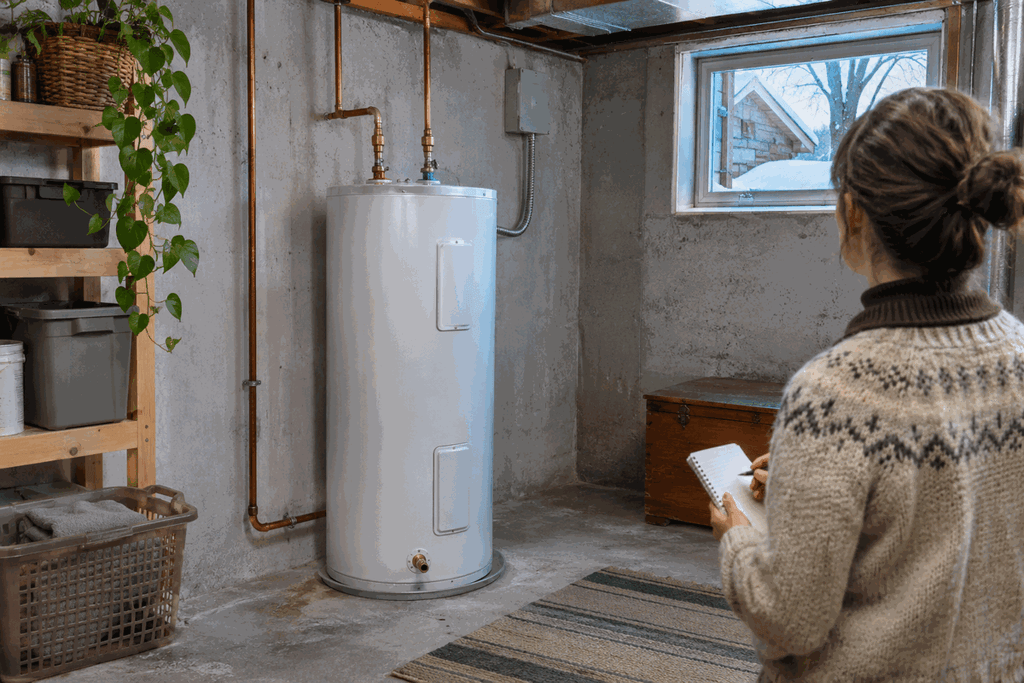
A noisy water heater does not identify its own fault by sound alone. A few clicks as it heats, a new rumble, a high-pitched sound at a tap and a bang after the washing machine stops are different observations. Record when the sound starts, how long it lasts, where it seems strongest and what else changes. A leak, water near electrical equipment, a gas smell, continuing discharge from a safety valve or unexpectedly scalding water changes the priority immediately. This guide is about the domestic water heater supplying taps and showers. A boiler that heats rooms is a different system.
Eight sound patterns below can help you frame the question, but none proves a diagnosis. Pipes transmit vibration through floors and walls, and an appliance beside the heater can be mistaken for the heater itself. The safest first step is usually observation from a dry, accessible place. Opening an energized panel, working on a gas connection, defeating a relief valve or draining hot water is not a listening test.
Stop conditions come before troubleshooting
If you smell the rotten-egg odour added to natural gas, leave the building promptly. Do not operate a switch, phone or appliance near the suspected leak, and avoid flames or sparks. Call 9-1-1 after you are outside in a safe place. Énergir’s gas-leak safety instructions explain this sequence. Do not remain inside trying to determine whether a hiss comes from the water heater or another gas appliance.
Water reaching a receptacle, wiring, a panel or an electrical appliance is another reason to keep away. Never cross standing water to reach a breaker or handle a wet control. Hydro-Québec warns about water near electrical installations. Have the area made safe before investigating the noise or the water source. Smoke, sparking or a burning smell also calls for an urgent response, not a closer look behind a cover.
A substantial leak, a tank that appears distorted, steam, dangerously hot water or persistent discharge from the temperature-pressure relief line needs prompt qualified attention. Keep children clear of hot water. Never plug, cap, clamp or disable that discharge route. If a clearly identified shutoff can be reached safely from a dry location, follow the instructions for your particular unit; otherwise wait for appropriate help. The companion guide to water heater warning signs covers other symptoms that may accompany a noise.
Build a useful description of the sound
Listen briefly from a safe distance with the equipment intact. Does the sound begin after a shower while the tank reheats, only when hot water flows, exactly when a tap closes, or at apparently unrelated times? Is it one click, a sequence of pops, a steady whistle, a vibration or a heavy bang? Has it been present since installation, or did it change suddenly? A short, safely made recording and a note of the time can be more useful to a technician than an attempted diagnosis.
Look at accessible, dry surfaces without touching hot fittings. Note whether there is moisture around the base, visible connections, a drain pan or the outlet of the safety discharge pipe. Do not remove insulation, reach behind the unit or touch water to find its temperature. Is hot water limited at one fixture or throughout the home? Does the sound occur with cold water too? A model number and installation date from a readable label can help identify the correct manual, but do not move the tank to find them.
Language can obscure the problem. One person calls a sound “hissing” where another hears water flowing. A sharp bang in a pipe can resonate near the tank. A heating cycle can include several mechanisms. A. O. Smith’s technical bulletin index separates mineral deposits, water hammer, heat traps and thermal movement among noisy-heater complaints. That list supplies possibilities, not a way to identify a fault without the model and conditions.
1. Popping or rumbling while a storage tank heats
Minerals can accumulate at the bottom of a storage tank or on heating elements. Water trapped under a deposit can heat and produce popping or a low rumble. It is a plausible explanation when the sound seems to come from the tank during a heating cycle. A. O. Smith’s mineral-buildup bulletin describes the process. Water composition, usage and maintenance history matter. Neither the volume of a pop nor the age of a unit measures how much sediment is present.
Record whether the noise is getting louder or more frequent and whether the available hot water or recovery time has changed. A qualified assessment can determine whether maintenance is suitable for that model and condition. Do not assume a quick DIY flush is harmless: stored water can scald, power or fuel must be handled correctly, and an old drain fitting may leak after it is disturbed. If the tank itself leaks, flushing does not repair its wall. Follow the specific manufacturer instructions rather than a generic video.
2. Small ticks and creaks as materials expand
Metal components and adjacent pipes expand as they warm and contract as they cool. A brief tick at the beginning or end of a cycle, with no other change, may be associated with this normal movement. A pipe held tightly against framing can carry the noise into another room. Some manufacturer manuals explicitly note that expansion and contraction sounds during heat-up and cool-down do not necessarily indicate danger. The word “necessarily” matters: a new loud bang, a leak or changing water pressure calls for a different assessment.
Expansion of the water in a closed plumbing system is a separate issue from a quiet tick in metal. A relief line that repeatedly runs, unusual pressure swings or visible tank distortion should not be dismissed as routine settling. A. O. Smith’s thermal-expansion bulletin explains how system configuration affects pressure. A professional may measure pressure and check the controls intended for that installation. A noise alone cannot justify adjusting a valve or adding an expansion tank.
3. A bang just after a tap or appliance shuts off
A sudden stop in water flow can send a pressure wave through piping, commonly called water hammer. The resulting bang can be heard beside the water heater even if a washing machine valve or another fixture triggered it. Rheem’s technical bulletins address water hammer separately from noises produced during heating. Note which fixture closes immediately before the sound, whether it occurs on both hot and cold lines, and whether a visible pipe moves.
Repeated shocks deserve attention, especially if a fitting begins dripping. The system pressure, valve behaviour, pipe support and plumbing layout can all affect the remedy. Do not fasten or obstruct a pipe at random to quiet it, and do not infer that the tank is failing because the sound is loudest there. A description tied to a specific appliance cycle lets a professional investigate the right part of the system.
4. Whistling, singing or hissing while water flows
A high-pitched sound limited to one tap may involve that fixture’s aerator, mixing cartridge, valve or another restriction rather than the heater. Compare other fixtures without taking them apart: hot water only, cold water too, one bathroom or every outlet? If the sound starts exactly when one tap opens and stops as it closes, that timing is helpful. Pipes can carry a sound, so the place where you hear it does not always identify its origin.
Scale near an electric element can also produce a hiss or sizzle during heating, depending on the model. A gas appliance raises a different safety question: a hiss with a suspected gas odour calls for evacuation, regardless of the possible plumbing explanations. Do not open a live element cover, loosen a gas fitting or turn a safety device to test a theory. A persistent whistle with a marked temperature or flow change should be evaluated.
5. Fan, compressor or unfamiliar vibration
A heat-pump water heater uses a fan and compressor, so its ordinary operating sound differs from that of a standard electric storage tank. ENERGY STAR discusses heat-pump water-heater noise in its installation guidance. The useful comparison is with that model’s usual cycle and manual, not with a silent conventional tank. New grinding, excessive vibration, error codes or unusually frequent cycles merit attention.
Some gas models use powered venting, and tankless heaters have their own start-up sequence. A motor sound is therefore neither automatically normal nor automatically a fault. Note when it starts relative to a hot-water demand, how it stops and whether the display reports a fault. Keep air openings unobstructed. Do not move ducts, remove covers or pile insulation around an appliance to dampen a sound. Those changes can affect its operation and safety.
6. Drips, sizzling and a wet floor
A drop reaching a hot surface may sizzle. Some gas water heaters can also produce condensation under particular operating conditions. Neither observation is a reason to explain away a growing puddle, persistent wetness, water from the tank base or moisture near electrical parts. A connection, nearby line, relief discharge or tank could be involved. The actual source needs to be located safely, with the equipment’s design in mind.
From a dry area, note whether water first appears above the tank, near a side connection, at the relief-line outlet or beneath the body. Photograph its extent from a safe distance and record whether it grows. Do not put a bucket where you must enter water or reach near energized equipment, and do not touch a hot discharge. Make an active leak area inaccessible until the appropriate person can secure and assess it. A tank wall failure is a different problem from a repairable external fitting.
7. Noise and water at the relief-valve discharge
A temperature-pressure relief valve is a safety device with a discharge path that must remain open. Repeated dripping or running can have several explanations: excessive water pressure, thermal expansion in a closed system, high temperature or a problem with the valve itself. Its sound cannot distinguish among them. Note, from a safe distance, whether discharge coincides with heating and whether it is occasional, repeated or continuous.
Do not cap the discharge, hold its lever closed, lift it for an experiment or direct hot water toward someone. A valve can discharge scalding water, and an older valve may not reseat after manipulation. A qualified person can assess pressure, temperature, system configuration and the device in accordance with the unit’s instructions. Strong discharge, steam or abnormal hot-water temperature warrants prompt attention. The purpose of the valve is protection, not noise control.
8. Gurgling or flow sounds at the fixtures and nearby pipes
Short-lived flow sounds may follow work on a water line or an interruption in service. A fixture, mixing valve or restriction can also change the noise when water moves. Ask whether the cold side behaves similarly, whether the sound began after building work, and whether just one fixture is affected. In a multi-unit building, sound can travel along shared piping from another unit. Those details help avoid attributing every flow noise to the heater.
Persistent pressure changes, several affected fixtures or a symptom that returns after service should be assessed as a broader supply question. Do not close unidentified valves serving other units or dismantle common piping. The professional needs the pattern, not a label such as “burned element” that has never been tested. A water heater may be operating normally while a component elsewhere creates the sound.
Five safe observations to organize the next step
- Check for stop conditions first. Gas odour, water near electricity, smoke, major leakage, continuous relief discharge and scalding take priority.
- Identify the equipment. Electric tank, gas, heat pump or tankless design; a safely readable label and the matching manual matter.
- Connect sound to an event. Heating, hot-water draw, a tap closing, a washing machine cycle or no apparent demand.
- Compare locations. One tap versus several; hot only versus hot and cold; tank versus pipe; brief versus continuing.
- Record accompanying symptoms. Reduced hot water, temperature swings, a fault display, moisture, pressure change and the date the pattern began.
These observations do not involve draining, opening panels or testing a relief valve. Stop even this limited check if the surroundings are unsafe. A manufacturer’s maintenance procedure may require model-specific precautions that cannot be inferred from a sound. The notes simply help the next person investigate efficiently.
What a qualified assessment can establish
An investigation starts with the sound pattern, model and visible condition. Depending on the evidence, a professional may distinguish tank from pipe noise, measure supply pressure, examine temperature and discharge, check connections and evaluate components the manufacturer specifies. Live electrical tests and access to heating elements are not occupant listening checks. Combustion and venting on gas equipment require suitable expertise. An inspection may find a plumbing issue outside the water heater altogether.
Maintenance, repair and replacement are different outcomes. Noise alone does not mean the tank must go; a tank leak or recurring problems may shift the decision. Ask what finding confirms the proposed cause, what work is included, whether hot water will be interrupted, and what change to monitor afterward. For the broader age and condition decision, see when to repair or replace a water heater. The water heater diagnosis and repair page describes the relevant service if an assessment is needed.
Frequently asked questions
Is a small click during heating normal?
Expansion can produce a brief click, but the surrounding facts matter. A newly loud sound, leak, unusual temperature or relief-valve discharge should be assessed. Sound alone cannot establish that an appliance is safe.
Does rumbling mean I need a new tank?
No. Deposits are one possible reason for rumbling, but an examination of the heater, any leak, performance and maintenance history is needed. A noise by itself does not establish the condition of the tank wall or a replacement decision.
Can I drain it to make the noise stop?
Draining can expose people to scalding water and cause leaks or damage if power or fuel and restart procedures are mishandled. Consult the exact manual and use competent help if you are not trained. Never treat the temperature-pressure relief valve as a routine drain tap.
Why does it bang after the washer fills?
A fast-closing appliance valve may cause water hammer in the piping. Note the cycle and whether the cold line is affected too. Pressure, supports and valves need a targeted check before blaming the tank.
When is a hiss an evacuation issue?
If you suspect a gas leak or smell the characteristic odour, leave without operating nearby controls and call 9-1-1 from a safe place. A high-pitched sound without that warning still warrants assessment if it persists; the sound alone cannot exclude a hazard.
Can I stop a dripping safety valve from making noise?
Do not block the outlet or force the lever. Repeated discharge can reflect pressure, expansion, temperature or a valve problem and needs an appropriate assessment. Heavy or very hot discharge requires prompt attention.
For other domestic hot-water topics, return to Water heaters and hot water. A clear, safe description of the sound helps direct an inspection; it does not substitute for one.