
Water heaters and hot water
Water heater warning signs: when do you need help?
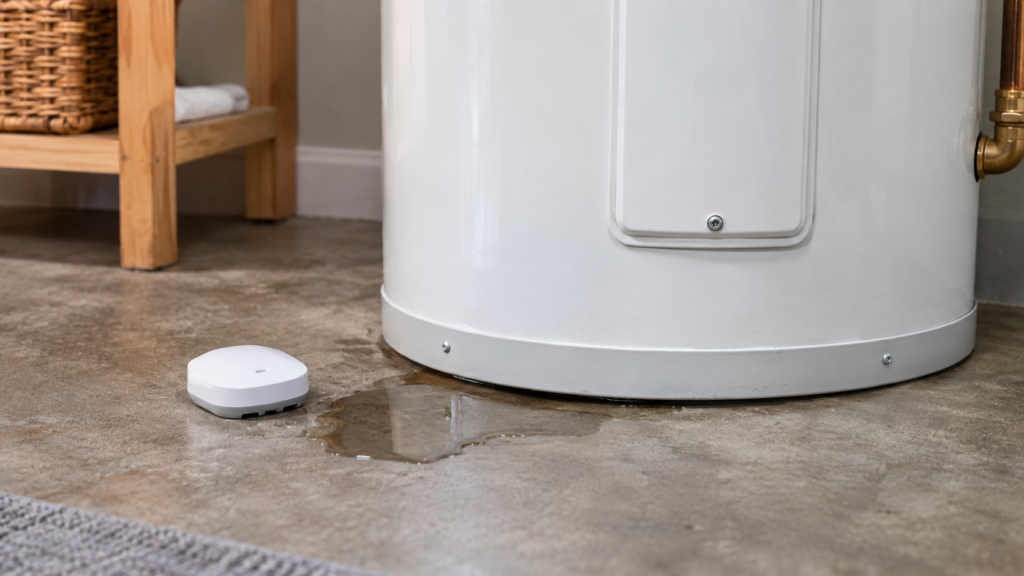
Water heater warning signs range from a loss of hot water to a leak, dangerously hot water, or a recurring electrical fault. The right response depends on the hazard and how quickly it is changing. Some situations call for evacuation or immediate help; others need a prompt inspection without assuming the tank has failed. This guide covers a domestic heater supplying taps and showers, not a space-heating boiler. It focuses on observations you can make without opening covers, handling electrical parts, or testing a hot pressure-relief outlet.
First decide how urgent the situation is
Leave and call emergency services if you smell natural gas, a carbon monoxide alarm sounds, or you cannot get out without crossing water near live electrical equipment. Énergir advises anyone who smells gas to avoid flames, switches, and devices that could spark, leave the building promptly, and call 911 from outside. Do not return until emergency personnel say it is safe. Do not investigate a suspected leak by restarting a burner or switching lights on and off.
Keep clear and get the hazard made safe immediately when water reaches receptacles, wiring, the heater’s electrical parts, or the distribution panel; when water is spreading; or when a relief pipe releases hot water or steam. Smoke or a burning smell also raises the priority. Hydro-Québec says a panel should be operated during water damage only when its strict dry-floor, dry-hands, and other safety conditions are met. If they are not, touch nothing, leave the area, and request assistance with a remote power shutoff. Equipment that has been wet needs appropriate inspection before power is restored.
Arrange a prompt assessment for a contained active leak, repeated relief-valve discharge, unstable temperature, a marked loss of hot-water capacity, or discoloured hot water. An isolated observation can be recorded, but a persistent, worsening, or recurring symptom deserves diagnosis. The priority comes from the amount and temperature of water, its location, and the people affected, rather than a fixed tank age. Do not postpone a safety response in order to take a better photograph.
Eight warning signs you can recognize safely
1. Water collects under the tank or around its base
A puddle under a water heater matters especially when it returns after the floor has dried. From a safe, dry position, note whether moisture appears near a visible top connection, an adjacent pipe, the relief discharge, or the bottom of the jacket. Condensation is possible under some conditions, but a growing puddle should never be dismissed as condensation without checking the source. A photograph of the dry and wet area, if safe to take, gives the person assessing the problem useful context.
Water from a failed tank, a loose connection, a valve, or another pipe can end up in the same pan. Where the water lands does not establish where it started. If it spreads, move people clear; protect belongings only if you can do so without stepping into water or approaching electrical equipment. If you know the relevant isolation controls and can reach them safely on a dry floor, follow the appliance instructions. Otherwise ask for help. Do not remove insulation, open a live panel, or attempt to seal the tank with an improvised product.
2. The temperature-and-pressure relief line drips or runs
A temperature-and-pressure relief valve is a safety device. Its discharge line must not be capped, plugged, restricted, or redirected where someone may be scalded. Hot water, steam, or a steady flow calls for urgent assessment while everyone stays away from the outlet. Even intermittent dripping needs explanation. A manufacturer manual may list thermal expansion in a closed system among possible causes of periodic discharge; that does not make every discharge harmless or identify the cause in your installation.
Without touching the pipe, record whether discharge follows heating or occurs at unrelated times. Do not lift a suspect valve lever as an experiment, plug the outlet, or turn up the heater to compensate for a short supply of hot water. A qualified person can evaluate pressure conditions, the valve, and the installation together. A safety valve may be responding to a condition that is not visible elsewhere. The fact that the floor around the tank is dry does not make a hot discharge safe to ignore.
3. Tap water becomes scalding or swings between hot and cold
An unexpectedly hot shower can injure a child or anyone with reduced mobility or sensation. Stop using the affected outlet, warn other occupants, and arrange an assessment. A mixing valve, a single shower control, a heater control, or a wider hot-water issue can all produce different patterns. If it is safe, note whether several fixtures are affected. Never use your hand to test a stream that may be scalding and do not ask someone else to step into a shower to reproduce the problem.
Health Canada separates the temperature of stored water from the temperature delivered at a tap. Its guidance addresses sufficiently hot storage to reduce Legionella risk and mixing protection that limits water at use points to about 49°C. Turning a thermostat down or up without understanding the whole system can trade one risk for another. A professional can assess the heater setting and mixing device in the context of the model and plumbing arrangement. A single unstable shower may point toward its control; a similar change throughout the home suggests a broader check.
4. Hot water disappears or the available supply drops sharply
Start with the scope, not a diagnosis. Does one tap run cold while other showers still work? Is cold-water flow normal? Was there an electrical outage or an unusual series of baths and laundry loads? A storage heater needs recovery time after heavy demand. One cold shower alone is not proof that the tank has ruptured. Record when the change started and how much hot water the household used beforehand. Avoid opening any access cover to look for an element or a reset control.
A complete or recurring loss of hot water needs assessment, particularly when it comes with a leak, a burning smell, or a breaker that trips. Do not reset a tripping breaker over and over. On a gas unit, do not attempt an improvised relighting procedure; use the exact manual only if conditions are clearly safe and seek qualified help when in doubt. The separate guide to running out of hot water addresses demand and recovery questions. This guide is about deciding whether a symptom needs urgent attention.
5. A breaker trips, something smells burnt, or a fault indicator appears
A breaker that trips repeatedly is a warning rather than permission to keep trying. Hydro-Québec includes frequent breaker trips, warm receptacles, and unusual smells among signs that an electrical installation needs attention. Do not open covers, touch wiring, or bypass a protective device. Tell the professional when the problem occurred, whether the floor is dry, and whether water has reached the appliance or nearby equipment. If water and electricity may meet, the first task is to keep people clear and have power secured under Hydro-Québec’s guidance.
Some heaters display a code or flashing indicator. If the view is safe and dry, photograph it and look up the exact model manual. A code can guide a technician but does not prove a particular part needs replacement. If a flood has reached the heater or circuit, apparent operation is not proof of safety; electrical equipment must be inspected before re-energizing. Énergir likewise cautions against using gas appliances affected by water before a qualified contractor checks them. Do not treat the return of hot water after a reset as evidence that the underlying problem is gone.
6. Hot water looks brown, rusty, or carries particles
Check whether the cold water is also discoloured and whether the effect occurs at one or several fixtures. Note if it began after a local supply interruption or plumbing work. Colour confined to the hot side can direct attention to the heater and hot-water piping, but it does not prove the tank is responsible. Colour in both hot and cold water points to a broader supply question. If water quality is uncertain, seek the relevant advice from your water supplier or local authority before using it for drinking or food preparation.
Appearance alone cannot establish potability or show the condition inside a tank. Clear containers and photographs can document hot versus cold, the location, and the time. Do not drain or flush a heater as your first reaction without understanding the model and scalding risk. The guide to brown tap water develops the wider household checks. Persistent hot-side-only discolouration deserves a targeted evaluation, even if it fades temporarily after a tap has run.
7. An unfamiliar noise appears together with another symptom
Popping, rumbling, or whistling does not by itself prove imminent failure. The appliance type, heating cycle, pipework, and pressure all matter. A new sound becomes more concerning when paired with a leak, scalding water, relief-valve discharge, or loss of heating. Do not stand beside a hot discharge line to make a recording. If safe, note when the sound happens and whether a shower, washing machine, or other demand was running. The sequence often helps more than an isolated description such as “loud.”
The companion guide to water heater noises explains different sounds in greater detail. Here the question is whether the combination calls for prompt help. A short recording made from a safe place may help the assessment, but neither the presence nor the absence of noise during a visit alone settles the cause. Avoid remote advice to drain, purge, or dismantle equipment based on a sound.
8. Dampness, visible corrosion, or staining keeps returning
Mineral deposits at a connection, rust near the base, a spreading stain, or peeling paint can point to repeated moisture. They are clues, not proof that the whole tank has corroded through. Look from a dry place without scraping, loosening a fitting, or moving pipework. A dry old stain may reflect an incident already resolved; a stain that grows suggests an active process. A catch pan helps limit damage in some installations but does not make an ongoing leak acceptable.
A nearby appliance, floor drain, or overhead pipe can complicate the apparent source. Note where the first drop or mark appeared and whether work was recently done. If no active hazard is present, a dated photograph can show whether a trace changes. If water is already spreading, do not wait days to compare pictures. A professional can distinguish a fitting leak, safety discharge, unrelated seepage, and tank failure without treating a surface mark as a complete diagnosis.
What information helps when you request an assessment?
Describe the immediate safety concern before the appliance history. A growing leak near a receptacle matters more at first than the brand or warranty. Once everyone is safe, find the model information on a label you can read without moving the unit. Photograph the complete heater, visible connections, wet area, and any fault display only if access remains dry and safe. Record when the symptom began and whether it has been continuous or intermittent. A power outage, recent plumbing work, or unusually heavy hot-water use can help frame the assessment.
Useful distinctions include “no hot water anywhere” versus “one shower cools after two baths,” and “puddle is spreading” versus “old dry mark.” Note whether cold water shows the same colour or flow change. If several fixtures are affected, say which ones. Mention young children or other people who might be especially vulnerable to scalding, as well as water nearing finishes, stored items, or electrical equipment. A photograph of a full pan may not reveal the source; report what you actually saw rather than assigning the water to the tank.
Do not collect evidence at the expense of safety. A video is not worth walking into standing water or approaching a live circuit. If a familiar shutoff can be reached safely from a dry floor, use only the procedure you know from the appliance and plumbing instructions. Ask for help if a valve is unfamiliar or difficult to reach. Never treat the pressure-relief discharge as a convenient place to run a test. The person attending can ask follow-up questions and perform the necessary checks with appropriate precautions.
Why a warning sign does not dictate one repair
The same puddle can arise from a top fitting, a relief outlet, an overhead pipe, or the tank. Lukewarm water can reflect demand, mixing, control trouble, or reduced heating capacity. Brown water can begin in distribution or older plumbing rather than in the heater. A good report describes the symptom and its context; it does not jump directly to replacing the unit. On-site work can examine the source, model, safety controls, connections, and operating conditions before a recommendation is made.
A repair may involve an accessible component, while a leaking vessel may require a different decision. Age, warranty terms, complete cost, and service history matter after the immediate hazard is addressed. The related guide on when to repair or replace a water heater covers that longer-term choice. Neither an age threshold nor a warranty label is enough to call an active leak safe from a distance. Likewise, a failed part does not automatically mean every other component has reached the end of its life.
After a visit: understand the finding and follow-up
Ask what source was found, which checks were performed, and what risks remain before restarting the heater. If the appliance or circuit was wet, clarify who must inspect and authorize electrical restoration. For a gas unit, ask what safety and venting checks are needed. If a relief discharge stopped, ask whether the pressure condition, valve, or another factor was identified; a dry outlet for one afternoon does not prove the cause has disappeared. Request clear instructions about what to monitor and when to call again.
Keep the model information, dated photographs, written advice, and invoice. Watch the area as instructed and report a recurring symptom promptly. If hot water returns but a damp mark keeps expanding, do not assume the issue is solved. Conversely, an old dry stain after a documented repair is not proof of a new leak. A record of the actual diagnosis helps separate a later event from the first one and reduces unnecessary handling of equipment. Follow the model manual and the professional’s instructions rather than an unrelated online reset sequence.
Frequently asked questions about water heater warning signs
Can a small leak at the base wait?
An active leak can grow and reach electrical equipment or finishes. Keep people clear, observe its extent without stepping into water, and arrange a prompt assessment. If water approaches electrical parts, leave the area and follow Hydro-Québec’s safety guidance. A catch pan does not settle the cause.
Should I reset the breaker when the water turns cold?
Repeated tripping needs an assessment, especially with moisture, a leak, or an unusual smell. Do not reset it in a loop or open an access panel. Equipment that has been wet needs appropriate inspection before it is re-energized.
Does a dripping relief valve mean the tank is finished?
No. Several conditions can cause discharge; it does not alone prove a failed tank. It still needs diagnosis, especially with continuous flow, hot water, or steam. Never cap or obstruct the discharge line.
If only hot water is brown, is the heater definitely at fault?
The hot side helps narrow the investigation but does not identify the source. Hot-water pipes, connections, and the tank need to be distinguished. Document hot and cold at several fixtures and seek water-use advice if quality is uncertain.
Can I solve scalding water by turning the thermostat down?
An improvised setting change can create a different risk. Stored-water temperature and scald protection at the tap are distinct. Avoid affected fixtures and have the controls and mixing protection assessed for the installation.
When should I seek a diagnosis rather than wait for another sign?
A recurring leak, relief discharge, unstable temperature, persistent loss of hot water, or repeated electrical trip deserves an assessment. Spreading water, steam, electrical contact, or a gas smell raises the urgency. Leave and call emergency services when there is immediate danger.
After following the safety steps, a persistent anomaly may call for water heater diagnosis and repair. Browse other hot-water topics in Water heaters and hot water.
Sources and scope
Hydro-Québec’s water-damage electrical guidance explains when to stay away from a panel and avoid restoring power. Énergir’s gas-leak instructions explain evacuation and emergency calling. Health Canada’s hot-water guidance distinguishes storage and tap temperatures. Rheem’s product education describes the safety role of a temperature-and-pressure valve. These are general references. The exact model manual and an on-site assessment govern a particular installation.